Pickleball is the fastest-growing sport in the United States, and the paddle is the single most important piece of gear you’ll buy. Unlike tennis, there are no strings to tune — the paddle’s weight, core, face material, and grip do all the work. Learning how to choose a pickleball paddle before you shop saves you from the two classic beginner mistakes: buying too much paddle for your skill level, or buying a cheap novelty paddle that slows your progress.
Quick answer: For most players, the right paddle is a midweight model (7.3–8.4 oz) with a 16 mm polymer honeycomb core, a standard (non-elongated) shape, a fiberglass or carbon-fiber face, and a grip circumference of 4 to 4.5 inches that fits your hand. If you ever plan to play in a sanctioned tournament, make sure the paddle is USA Pickleball approved.
Weight: How to Choose a Pickleball Paddle That Feels Right
Weight changes how a paddle feels more than anything else. Most paddles sit between about 7 and 8.5 ounces (200–240 g), and that range breaks down into three practical bands:
- Lightweight (under ~7.3 oz / 207 g): Faster hands at the net and easier on the arm, but you’ll need to swing harder to generate power. A good fit for touch players and anyone managing elbow or shoulder issues.
- Midweight (7.3–8.4 oz / 207–238 g): The balanced middle — enough mass for drives, light enough for quick volleys. The best starting point for most players, especially beginners.
- Heavyweight (over ~8.4 oz / 238 g): More power and stability on hard hits, but slower to react with and more tiring over a long session.
If you’ve ever had tennis elbow, lean lighter. If the paddle twists in your hand on off-center hits, try something a touch heavier.
What Is Swing Weight?
Static weight is only half the story. Swing weight — roughly 105–125 on most paddles — describes how heavy the paddle feels when you move it. Two paddles can weigh the same on a scale but feel different in motion. Lower swing weights feel quicker at the kitchen line; higher ones carry more momentum through a drive. Most beginners do best with a balanced-to-head-light feel.
Core Thickness: 16 mm for Control, 13 mm for Power
Almost every modern paddle uses a polymer honeycomb core. The two common thicknesses are 16 mm and 13–14 mm, and the difference is immediately noticeable:
- 16 mm cores feel softer, absorb vibration, and produce a bigger sweet spot. They forgive mishits, which is exactly what a learning player needs for dinks and resets.
- 13–14 mm cores are livelier off the face and deliver more power, but they’re less forgiving when you miss the center.
Older or cheaper cores made of aluminum or Nomex tend to feel stiffer and degrade faster — polymer is the safer choice for a first or second paddle. For beginners, the standard advice is simple: choose 16 mm. You can trade forgiveness for pop later, once your contact point is consistent.
Face Material: How to Choose a Pickleball Paddle for Spin and Feel
The face is the paddle’s outermost layer, and it determines how the ball comes off — and how much spin you can generate:
- Fiberglass: Springy with more “pop” for effortless power. Often found on affordable paddles and a forgiving first face for beginners.
- Carbon fiber: Stiffer and more consistent, with excellent feel and spin. Common on mid-range and premium paddles.
- Graphite: Crisp and light — a middle ground between the two.
A gritty, textured face helps you put spin on the ball, which matters more than most beginners expect. USA Pickleball limits how rough a face can be for tournament play, so any legal texture is subtle — and texture that wears smoother over months of play is normal, not a defect.
Shape and Sweet Spot
Paddle shapes change the size of the sweet spot and how far you can reach:
- Standard / widebody: Wider face, bigger sweet spot, more forgiving. Ideal for doubles and beginners.
- Elongated: Longer face, extra reach and pop, but a narrower sweet spot. Better suited to singles players with consistent contact.
USA Pickleball limits overall dimensions (the length plus width can’t exceed 24 inches), but within those limits the shape choice is about your game. If you mostly play doubles at the local courts, standard shape is the easy recommendation.
Grip Size and Comfort
Grip size is the spec beginners overlook — and the one most directly tied to injury risk. Standard grip circumference runs from 4 to 4.5 inches:
- Measure from the middle crease of your palm to the tip of your ring finger. Under 6.5 inches points to a 4-inch grip; over 7 inches points to 4.5 inches; the middle range usually fits the standard 4.25 inches.
- Do the finger test: hold the paddle in a relaxed handshake grip. You should be able to fit about the width of one finger between your fingers and palm.
- When in doubt, go smaller. You can build a grip up with overgrip tape; you can’t shrink one. A too-large grip stresses the wrist; a slightly small one just lets the paddle rotate a bit more.
Handle length matters too — standard handles (5–5.25 inches) are fine for one-handed play, while longer handles give two-handed backhand players more room. Cushioned or tacky overgrips absorb sweat and dampen vibration, and replacing a worn grip is one of the cheapest upgrades in the sport.
The Details That Matter Before You Buy
A few final checks separate a good buy from a regret:
- USA Pickleball approval: Required only for sanctioned tournaments, but approval also signals the paddle meets real quality and safety standards. Most reputable paddles carry it.
- Edge guard: A full-wrap edge guard protects against chips from ground drags and net taps — worth checking in product photos if you play outdoors.
- Indoor vs. outdoor: Outdoor balls are heavier, so outdoor play rewards slightly more stable, forgiving paddles.
- Budget: Paddles run roughly $40 to $250. An $80–150 paddle with the right specs for your hand outperforms a $250 paddle with the wrong ones. Don’t pay for pro-level spin technology before you can reliably hit the sweet spot.
If your elbow or shoulder aches after long sessions, a lighter paddle and a fresh overgrip help — and our How to Choose the Right Massage Gun guide covers recovery options. Building basic arm and shoulder strength also goes a long way; see our How to Choose the Right Home Gym Equipment guide.
Our Picks
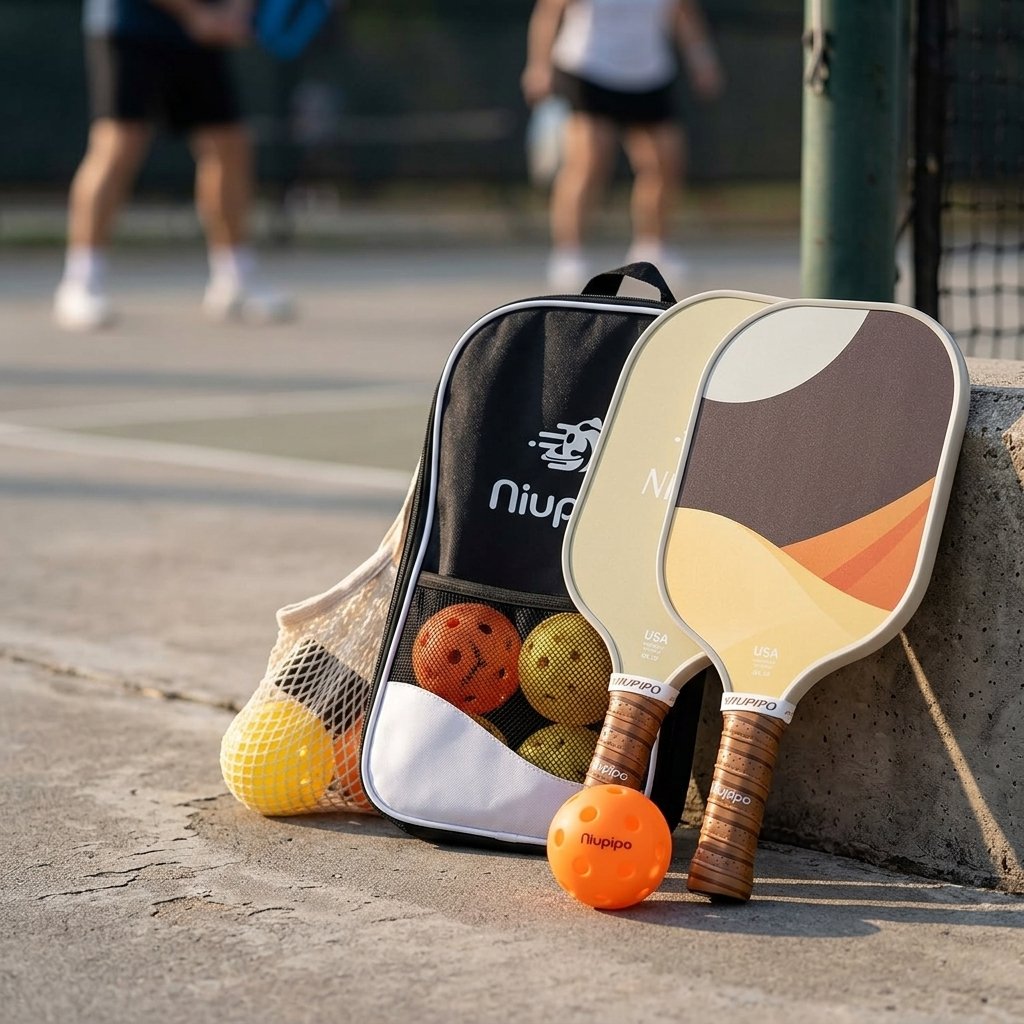
niupipo Pickleball Paddles Set of 2 — USAPA Approved Fiberglass Set — A USAPA-approved fiberglass-face set that ships with two paddles, so you can bring a partner to the courts. Fiberglass gives easy power for beginners, and a two-pack is the cheapest way to start playing together.
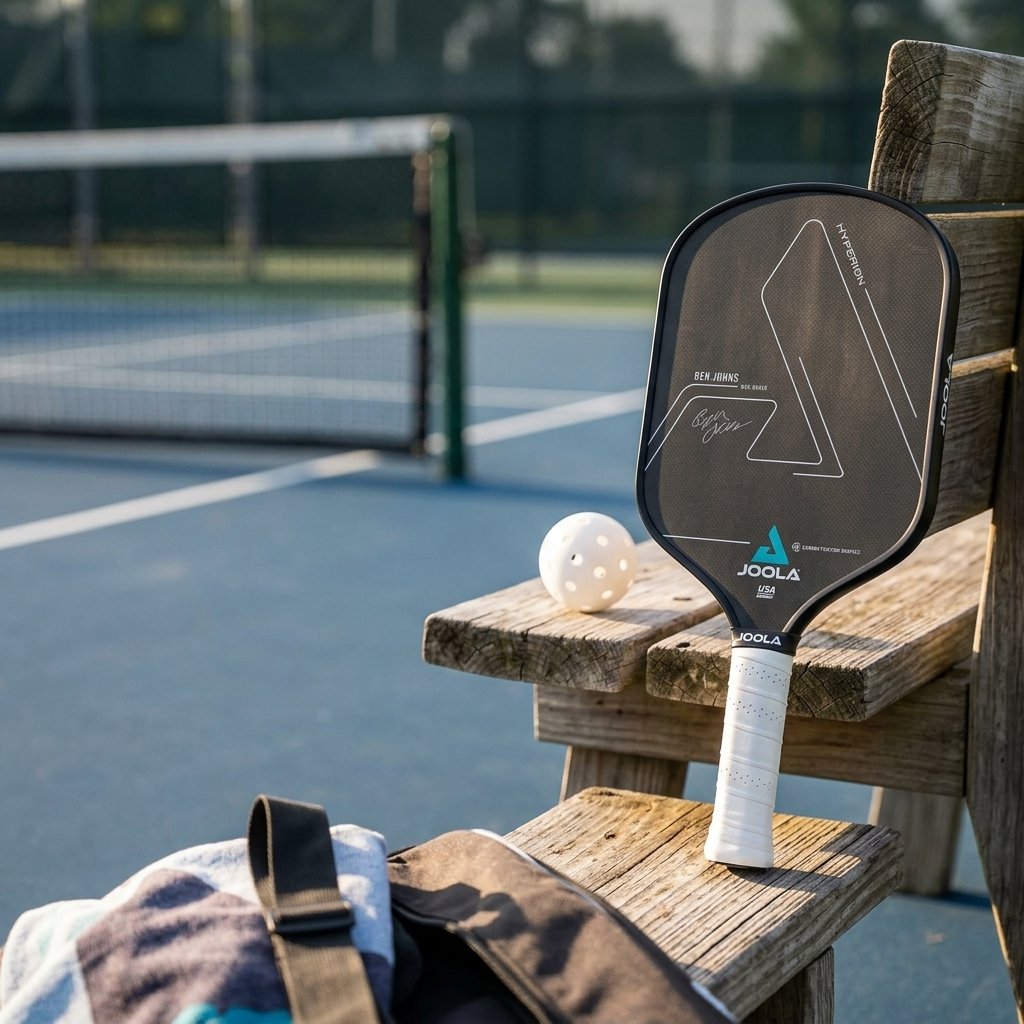
JOOLA Ben Johns Hyperion CFS 16 — Carbon Fiber Pickleball Paddle — A carbon-fiber-faced paddle from one of the sport’s biggest brands, built around a 16 mm core for control and feel. The right step up once you’ve outgrown a beginner set and want more spin and consistency.
Don’t forget the balls: grab a pack of outdoor balls like the Franklin Sports X-40 if your courts are outside.
Frequently Asked Questions
What’s the best pickleball paddle for a complete beginner?
A midweight paddle with a 16 mm polymer core, a standard shape, and a fiberglass face. Sets of two — like the niupipo set above — are ideal because you can bring a friend and learn together. Court time will improve your game far more than any upgrade.
What does 16 mm vs. 13 mm core actually mean on the court?
16 mm feels softer and more forgiving: your dinks drop in, your resets behave, and mishits still land. 13–14 mm feels livelier and faster: your drives carry more, but mishits fly. Beginners should start at 16 mm and specialize later.
Do I need a USA Pickleball-approved paddle?
Only if you plan to play in sanctioned tournaments. For casual and rec-center play, approval isn’t required — but most quality paddles are approved anyway, so it’s a useful quality signal when comparing options.
How long does a pickleball paddle last?
For regular players, a paddle typically lasts 6–12 months before the face texture wears smooth and performance drops. Heavy outdoor play and edge damage shorten that. Replace worn grips as needed — a fresh overgrip is a cheap way to extend a paddle’s usable life.
Can kids use adult pickleball paddles?
They can for casual play, but a lighter paddle with a smaller grip fits them better. A two-paddle set is the practical answer for families: adults get a full-size paddle, and kids can start with the lighter of the two.
As an Amazon Associate I earn from qualifying purchases.