A massage gun can be one of the most useful recovery tools you own — whether you lift weights, run, sit at a desk all day, or just want to work out a stubborn knot in your shoulder. The catch is that learning how to choose a massage gun is harder than it looks: product pages push big speed numbers that matter far less than the specifications most brands stay quiet about. This guide breaks down what actually affects how a massage gun feels and performs, so you can buy with confidence instead of guessing from a box of numbers.
Quick answer: If you want deep, effective percussion, prioritize amplitude (how far the head travels) and stall force (how much pressure the motor handles) over percussions per minute, which is mostly marketing. Most people do best with a mid-range device offering 10–14 mm of amplitude, several speed settings, and a few hours of battery life — you do not need the most expensive model to get real relief.
Amplitude: the spec that defines how deep your massage gun reaches
Amplitude is how far the massage head travels back and forth with each stroke, measured in millimeters. It is the single most important specification, because it sets the ceiling on what the device can do. Higher amplitude means deeper, more forceful percussion; lower amplitude feels gentler and more superficial.
Mini massage guns typically run 8–10 mm of amplitude, while full-size models reach 12–16 mm. Below about 8 mm, you are getting vibration rather than true percussion. If you want to treat dense muscles like quads, glutes, or hamstrings, look for at least 12 mm of amplitude — that depth is what separates a device that reaches deep tissue from one that just buzzes the surface.
For smaller areas such as calves, forearms, or shoulders, 8–10 mm is often plenty and can actually be more comfortable. A smaller person with a slighter build may prefer a shallower stroke, while a larger, more muscular person will get more out of a heavy-duty device with serious amplitude. Either way, compare amplitude first, before anything else on the spec sheet.
Stall force: how hard you can press before the motor gives up
Stall force is the amount of pressure you can apply to the gun before the motor bogs down or stalls out, measured in pounds. It is what separates a device you can lean into from one that quits when you press it into a glute.
For most users, a stall force in the 20–40 lb range offers a good balance of power and versatility. Beginners and lighter users rarely need more than 20–30 lbs — most people never press hard enough to use the upper end of a 50–60 lb rating. If you are larger, heavily muscled, or want deep work on dense muscle groups, aiming for 40 lbs or more makes sense.
One caution: treat manufacturer stall-force claims as rough guidance rather than lab precision. Few brands publish how they measure it, and it is the specification most likely to be inflated. Amplitude is the number you can trust more; use stall force as a tiebreaker between otherwise similar models.
Speed settings, noise, and everyday comfort
Specifications are only half the story. A massage gun that is annoying or tiring to use will sit in a drawer, no matter how powerful it is.
Speed levels (percussions per minute)
Most guns offer 2–5 speeds, typically ranging from about 1,200 to 3,200 percussions per minute. Lower speeds feel gentler and suit warm-ups, sensitive areas, or winding down; higher speeds feel more aggressive and suit pre-workout use or dense muscle.
Variable speeds matter more than the headline maximum. The PPM number on the front of the box is the most advertised and least important figure: 3,200 percussions per minute at shallow amplitude still only travels a few millimeters. What matters is having enough settings to find a comfortable intensity for each muscle group.
Noise level
Noise matters more than most spec sheets suggest, especially if you use the device at home, in an apartment, or while watching TV. Quieter models run around 45–55 decibels — roughly the level of a normal conversation. Mini guns tend to be quieter than full-size ones, and brushless motors are generally the quieter design choice. If you plan to use the gun late at night or around other people, put noise near the top of your priorities.
Size, weight, battery, and ergonomics
A massage gun that tires your arm gets used less. Pay attention to how the device feels in your hand, not just what it does to your muscles.
Mini vs full-size massage guns
Mini massage guns weigh around a pound and slip into a gym bag or carry-on, making them ideal for travel, the office, and light daily use. Full-size models are heavier — often 2 to 2.5 lbs — but deliver the deeper amplitude and higher stall force that serious recovery work demands.
Think about how you will actually use it. If you mostly treat your own back and shoulders, handle shape matters as much as size: an ergonomic or multi-grip handle makes self-massage far easier than a straight stick design. A device that is awkward to aim at your own shoulder blades will frustrate you every session.
Battery life and charging
Look for the runtime at a realistic speed setting, not just the headline figure measured at the lowest speed. A few hours of use per charge is plenty for typical sessions, since most people use the device for 10–15 minutes at a time — even a modest battery covers a week of sessions.
USB-C charging is a practical bonus that keeps your cable collection simple. Also check whether the battery is removable: a sealed battery sets the lifespan of the whole device, while a swappable one lets a heavily used gun last for years.
Pairing a massage gun with a recovery-tracking wearable helps you train smarter — see our guide on how to choose a smartwatch.
Attachments and extras worth paying for
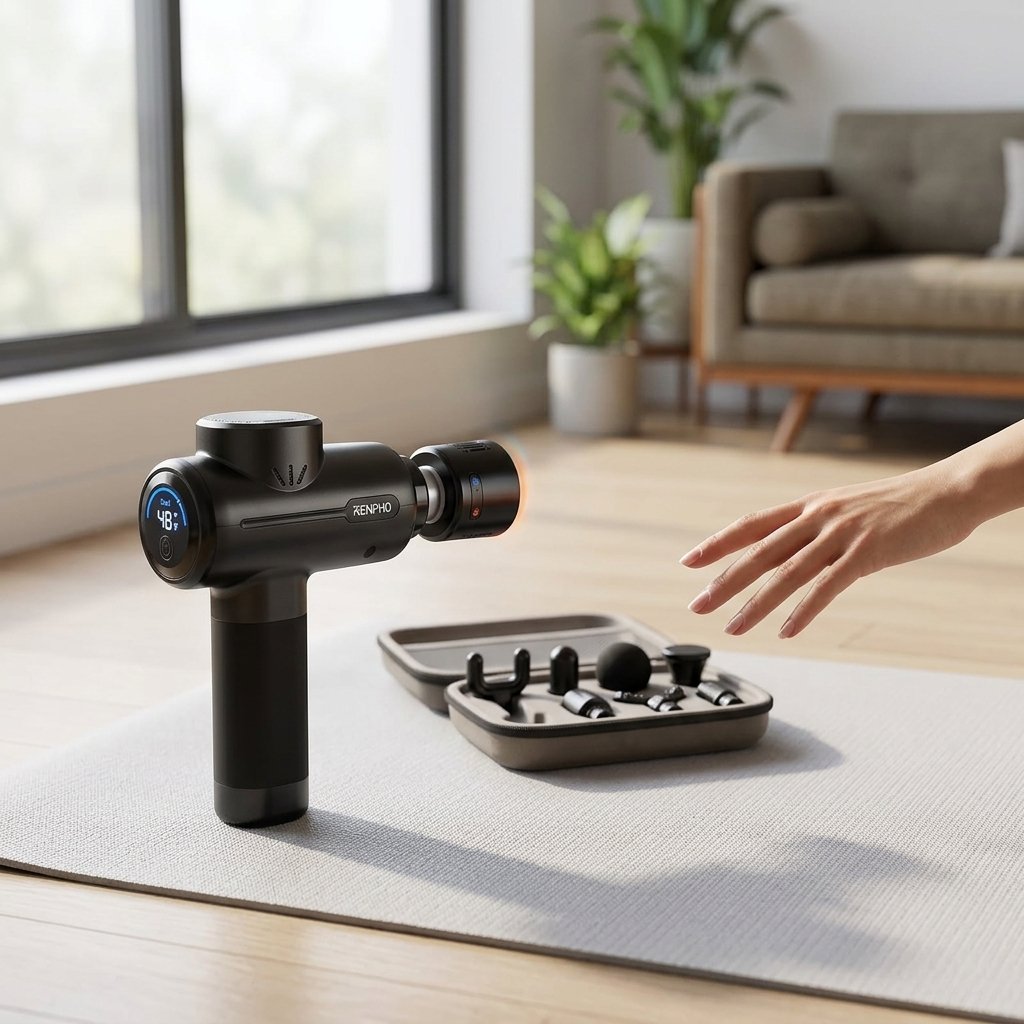
Most people use two attachments: a flat head for larger muscle groups and a ball head for general, all-over use. The rest are packaging — do not pay a premium for a case of fifteen shapes you will never touch.
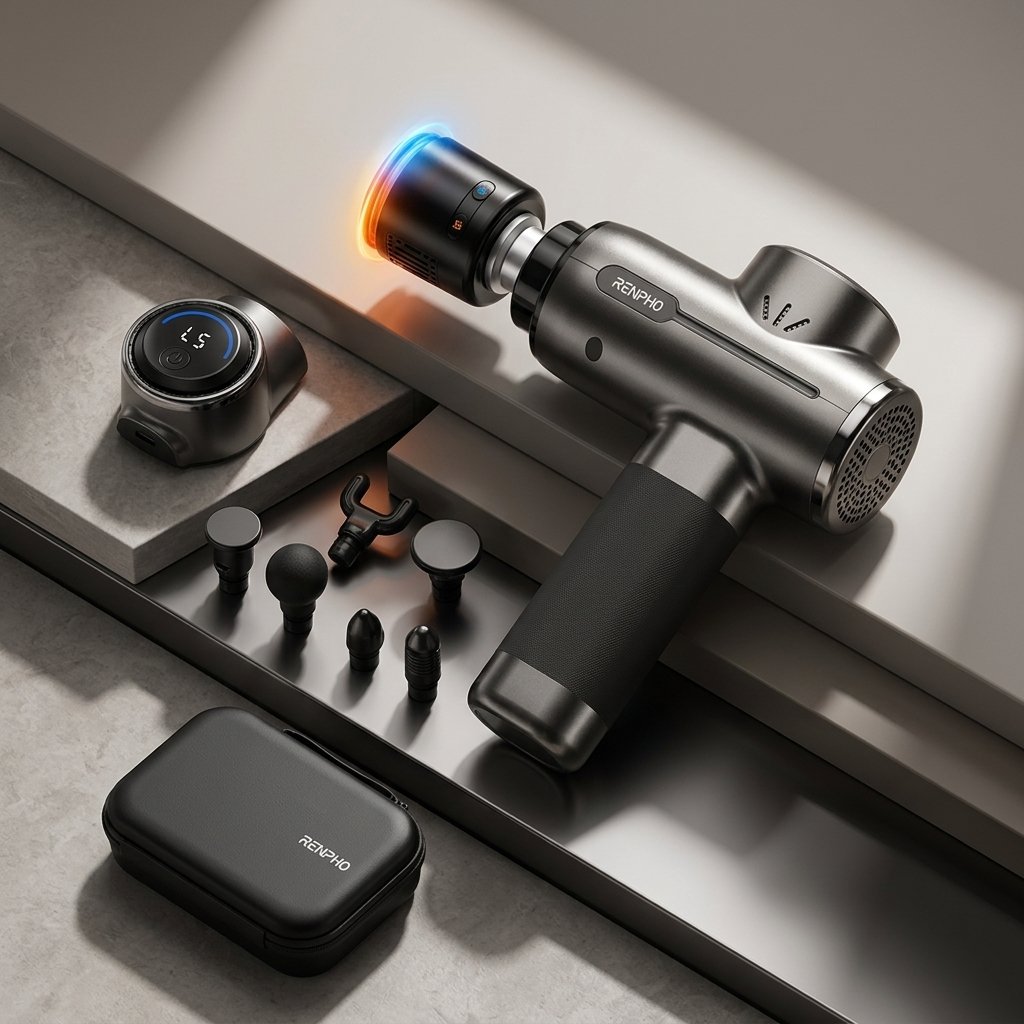
A few extras are genuinely worth considering. Heat and cold therapy heads (thermal attachments that warm or cool the treatment area) add real versatility, combining percussion with temperature therapy in a single device. App-guided routines can help beginners learn proper technique and session timing. A carrying case matters if you travel with the device. Decide what you will actually use before paying for it — and remember that a higher price does not automatically mean higher quality in this category.
Our picks
- RENPHO Active Thermacool 2 — Percussion with a thermal head for heat and cold therapy, a versatile pick for recovery at home.
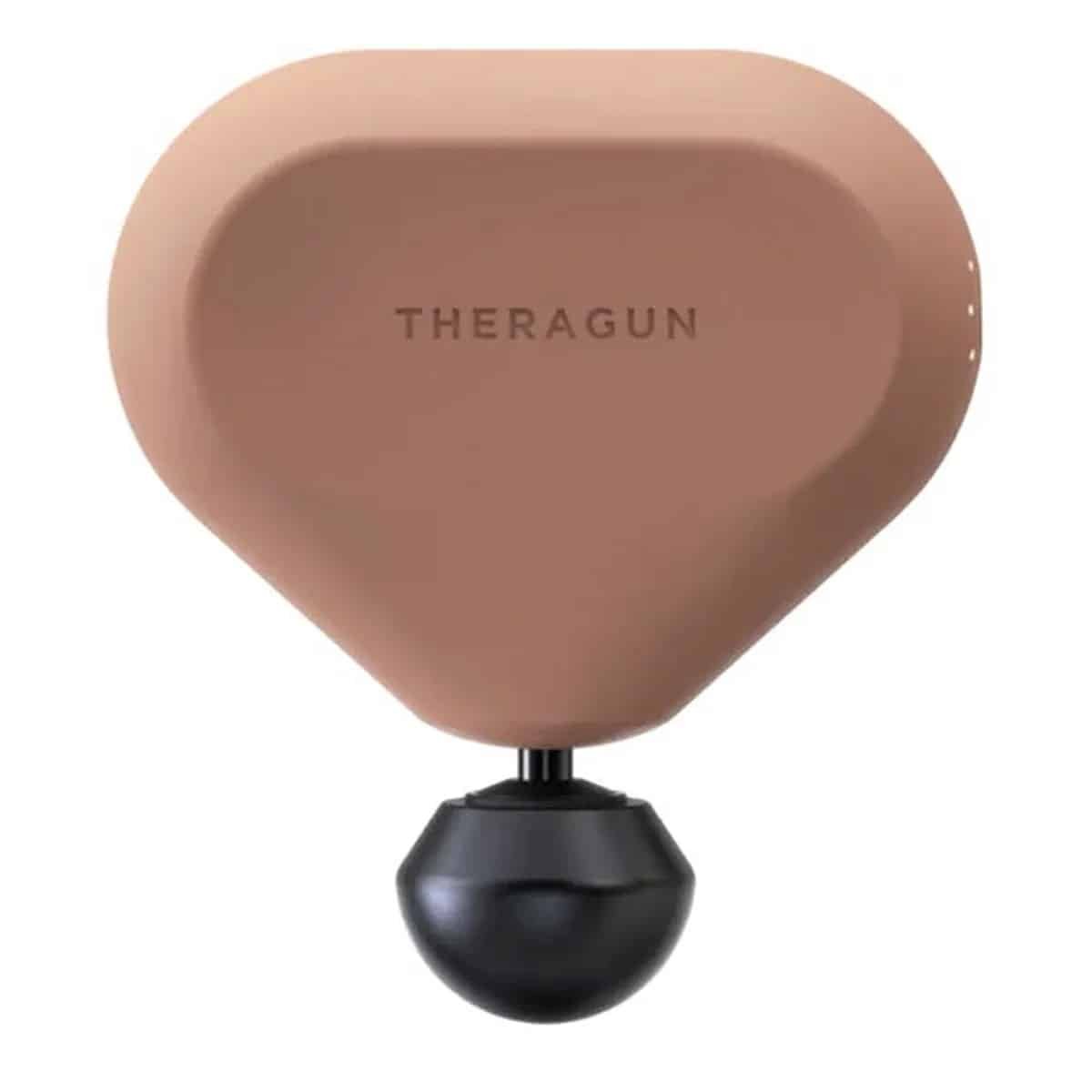
- Theragun Mini (2nd Gen) — A compact, travel-friendly massage gun from a well-known recovery brand, ideal for relief on the go.
Massage gun FAQs
How often should you use a massage gun?
Most people use a massage gun for 1–2 minutes per muscle group, once or twice a day. Start with the lowest speed and short sessions, then adjust based on how your body responds. More is not always better — overdoing a single area can leave it feeling irritated.
Can a massage gun help with muscle soreness after workouts?
Percussive therapy is commonly used for post-exercise soreness and tightness, and many athletes include it in their recovery routines. Research on long-term effects is still developing, so treat it as one tool among several — alongside rest, hydration, and sensible training — rather than a cure-all.
Are mini massage guns as effective as full-size ones?
Mini guns trade depth for portability: they typically offer 8–10 mm of amplitude, which suits lighter use and smaller muscle areas. For deep work on large, dense muscles like quads and glutes, a full-size model with 12 mm or more of amplitude performs noticeably better. Choose based on the muscles you actually treat most.
Is it safe to use a massage gun every day?
For most healthy people, daily use on muscles is fine if you keep sessions short and avoid bones, joints, the neck’s front, and injured areas. If you have a condition affecting circulation or clotting, take blood thinners, or have areas of numbness, check with a clinician before using one at all.
As an Amazon Associate I earn from qualifying purchases.