A pressure washer is one of those tools that earns its keep fast: a Saturday with one can strip a winter’s worth of grime from a driveway, revive a gray deck, and make vinyl siding look new again. But the wrong machine either can’t cut through caked-on dirt or — worse — can gouge wood and strip paint. This guide explains how to choose a pressure washer with the right power, type, and features for your home, so you buy once and clean confidently.
For most homes, an electric pressure washer rated 1,800–2,300 PSI with 1.2–1.8 GPM handles cars, decks, fences, and siding without damaging surfaces. Choose gas only if you regularly clean large concrete areas or need to work far from an outlet. Match the nozzle to the surface — a wide 40° tip for paint and wood, a narrower 25° tip for concrete — and always start with low pressure.
How to Choose a Pressure Washer by Power: PSI and GPM
PSI — pounds per square inch — measures the force of the water stream. GPM — gallons per minute — measures how much water the machine moves. Both numbers matter, and for different reasons: PSI breaks grime loose, while GPM rinses it away before it resettles. A high-PSI machine with a weak flow cleans slowly, no matter what the headline number says.
To compare models fairly, multiply the two: cleaning units = PSI × GPM. A 2,300 PSI machine at 1.2 GPM (2,760 cleaning units) will usually out-clean a 2,600 PSI machine at 1.0 GPM (2,600 cleaning units), even though the second number looks bigger on the box.
- Light-duty (1,200–2,000 PSI, 1.2–1.8 GPM): cars, patio furniture, grills, outdoor toys. Entry-level electric models live here.
- Medium-duty (2,000–3,000 PSI, 2.0–2.8 GPM): fences, decks, sidewalks, vinyl siding. Mid-range electric or entry-level gas.
- Heavy-duty (3,000+ PSI, 3.0+ GPM): large driveways, oil stains, paint stripping. Gas territory — more than most homes need.
One warning: more pressure is not always better. Excess PSI etches concrete, gouges softwood decking, and strips paint off siding and trim. Buying for the job you actually do beats buying the biggest number on the shelf.
Electric vs. Gas: How to Choose a Pressure Washer Type
This is the biggest decision you’ll make, and it comes down to how you clean.
Electric pressure washers
Electric models are lighter, quieter, cheaper to run, and start with a switch instead of a pull cord. They need almost no maintenance — no oil changes, no fuel to store, no carburetor to clog — and they produce no exhaust fumes, so they’re fine to run close to the house or garage. Most modern electrics handle the full range of home jobs: cars, decks, fences, patio furniture, and siding. The trade-offs are a shorter reach (you’re tethered to an outlet) and lower peak power.
Gas pressure washers
Gas models deliver the highest PSI and GPM in every price class, and they work anywhere — no outlet needed, which matters on a large property or far from the house. The costs: they’re louder, heavier, and need real maintenance — oil changes, fuel stabilizer for storage, spark plugs, air filters. They also emit exhaust, so never run one in an enclosed space.
Bottom line: if you’re washing cars, the deck, and the driveway a few times a year, electric is the smarter buy. Reach for gas when you’re cleaning a large property regularly, prepping for commercial work, or need to strip serious grime fast. If you only need a washer once a year, renting one for a weekend is cheaper than owning either type.
Like a cordless drill, a pressure washer earns its place in the garage by handling jobs a garden hose can’t — if you’re rounding out your toolkit, read our guide on how to choose a cordless drill.

Nozzles and Spray Patterns
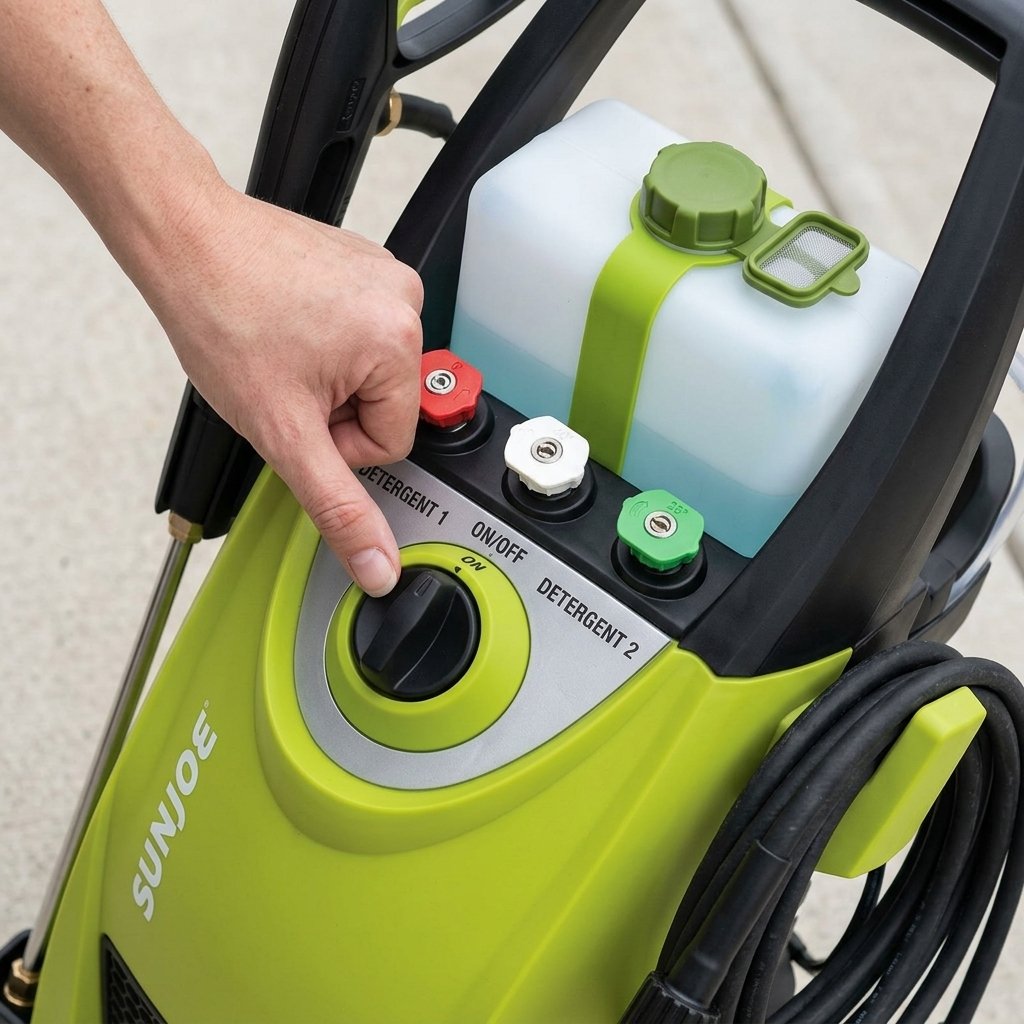
The nozzle decides how the water hits the surface — and it’s what keeps a powerful machine from becoming a destructive one. Most washers ship with color-coded quick-connect tips, and each color means a fixed spray angle:
0° (red) — pinpoint jet
The most concentrated and the most dangerous. It can cut skin, gouge wood, and strip paint. Use it only for small, stubborn stains on hard concrete, from a distance.
15° (yellow) — narrow fan
Intense cleaning for paint prep, stripping flaking paint, and deep stains on concrete and brick. Keep it moving, and keep your distance on anything softer than concrete.
25° (green) — the all-rounder
The default choice for driveways, sidewalks, decks, and fences. Strong enough to lift embedded dirt, wide enough to spread the load safely.
40° (white) — the gentle fan
The safe pick for cars, windows, vinyl siding, and patio furniture. When in doubt, start here.
Soap nozzle (black) — low-pressure detergent
A wide, low-pressure tip designed to draw detergent or foam through the machine. Soap first, let it dwell, then rinse with a wider tip.
Two rules apply to every tip: test on an inconspicuous spot before committing, and never point the stream at people, pets, or electrical fixtures. An adjustable or turbo (rotating) nozzle can replace several fixed tips if you prefer fewer attachments.
Features Worth Paying For
- Onboard detergent tank or foam-cannon compatibility — applying soap through the washer saves a separate step.
- A long, flexible high-pressure hose (25 feet or more) with quick-connect fittings — reach matters more than you think.
- Total Stop System (auto shut-off) — the pump idles down when you release the trigger, extending motor life.
- Metal (brass) hose fittings instead of plastic — plastic cracks and leaks first.
- Sturdy wheels and a compact footprint — a washer that tips over or fights you in storage gets used less.
- On electric models, an induction motor runs quieter and lasts longer than a universal motor.
What You Can Skip
- Chasing the maximum PSI number — marketing loves it, your deck doesn’t need it.
- Hot-water units — pro-grade overkill for residential cleaning.
- Bulky “deluxe” accessory bundles — most owners use two nozzles and a foam cannon; the rest gathers dust.
- Built-in hose reels that kink — a separate hose hanger usually works better.
Our Picks
Fall cleanup works best as a one-two punch: clear leaves and loose debris with a leaf blower first, then wash away the grime underneath — see our guide on how to choose a leaf blower.
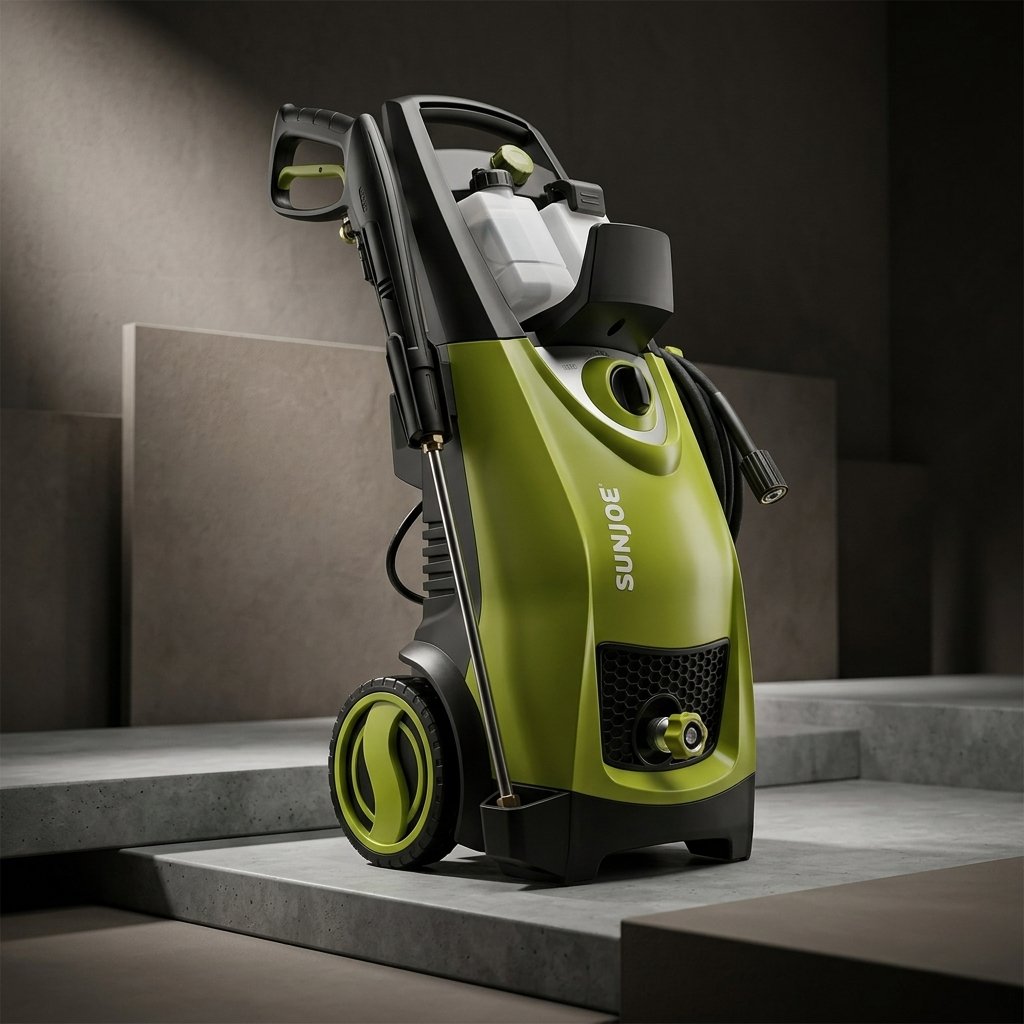
- Sun Joe SPX3000 — 2030 PSI Electric Pressure Washer with Dual Detergent Tanks — a 2,030 PSI electric model with dual detergent tanks and five quick-connect nozzles, a strong default choice for first-time buyers tackling driveways, decks, siding, and cars.
Frequently Asked Questions
Can a pressure washer damage my car’s paint?
Yes — too much pressure or the wrong nozzle will chip paint and trim. Stick to 1,200–1,900 PSI, use a 25° or 40° tip, and keep the wand 12–18 inches from the surface. Let the detergent and flow do the work, not brute force.
Is it safe to pressure wash a wood deck?
Yes, with care. Use medium pressure with a wide fan tip, keep the wand moving in long, even passes, and test in a hidden spot first. Softwood gouges easily, and holding the jet in one place will leave marks. Never use the 0° tip on wood.
Do I need to use detergent?
Not always. Plain water handles dust, pollen, and light grime fine. Detergent earns its keep on mildew, algae, grease, and oil stains — apply it with the soap nozzle, let it dwell a few minutes, then rinse with a wider tip.
Should a first-time buyer get electric or gas?
Electric. It’s lighter, quieter, easier to start, and plenty powerful for the jobs most homeowners actually do. Step up to gas only when electric genuinely can’t keep up — large properties, commercial work, or heavy paint prep.
As an Amazon Associate I earn from qualifying purchases.