A frying pan is the hardest-working pan in most kitchens. It fries eggs in the morning, sears chicken at night, and handles everything from grilled cheese to pan sauces in between — which is why learning how to choose a frying pan is worth a few minutes before you buy. The wrong pan sticks, warps, or sits unused because it is too heavy or too small. The right one becomes the pan you reach for every single day.
Quick answer: For most home cooks, a 10- or 12-inch frying pan is the best single choice — 10 inches for one or two people, 12 inches for a family. Pick stainless steel for searing and pan sauces, cast iron for high-heat cooking and oven finishes, or nonstick for eggs and delicate foods. Then check that the pan fits your burner, works on your stove type, and matches the care routine you will actually follow.
How to Choose a Frying Pan by Material
The material decides how a pan heats, what it can cook, and how much care it needs. There is no single best material — there is only the best material for what you cook most.
Stainless Steel — Best for Searing and Pan Sauces
Stainless steel is the workhorse of serious home cooking. On its own it is a poor conductor of heat, so look for tri-ply construction — a layer of aluminum or copper sandwiched between two layers of stainless steel — which spreads heat evenly across the surface. A good stainless pan handles high heat, goes from stovetop to oven, and can last 10 to 20 years or more. It also builds fond, the browned bits left after searing, which dissolve into rich pan sauces. The trade-off is technique: food sticks if the pan is not preheated and oiled first, and stuck-on food means more scrubbing.

Cast Iron — Best for High Heat and Heat Retention
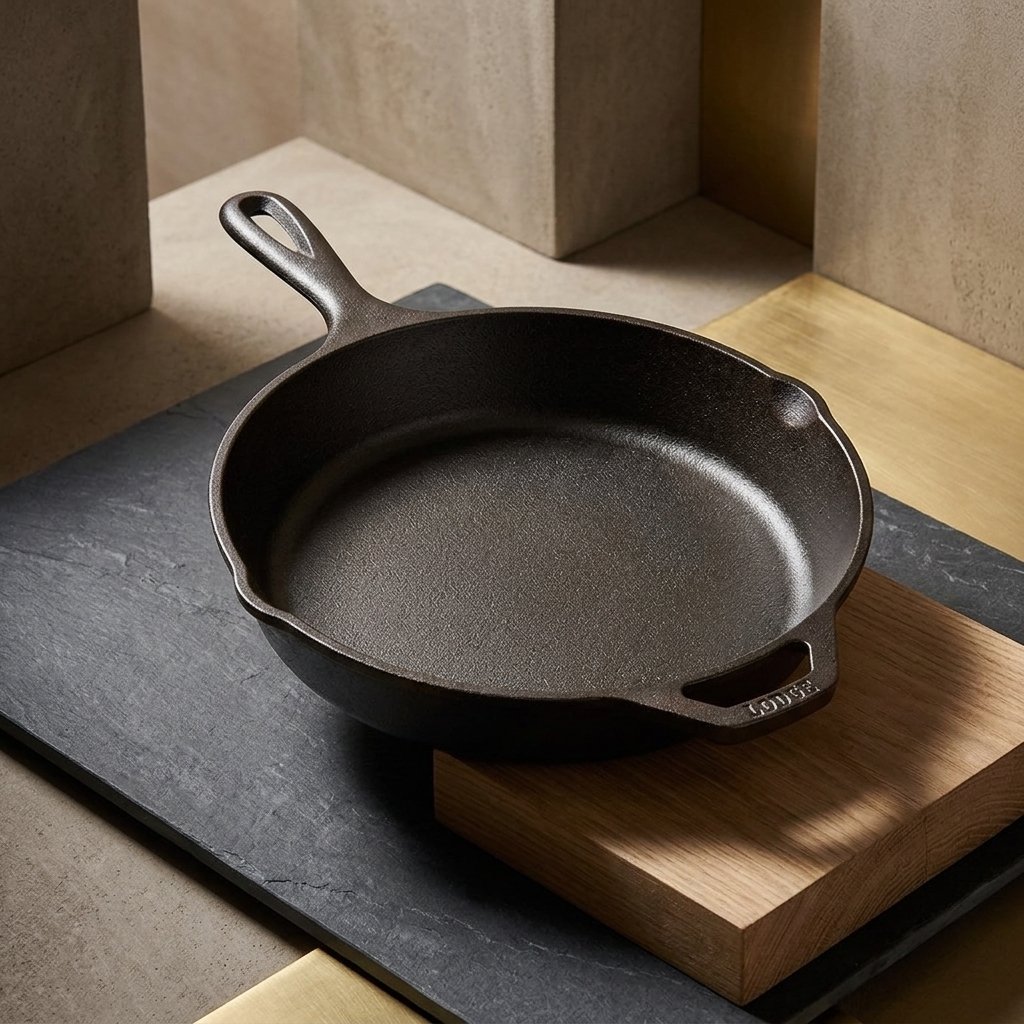
Cast iron heats slowly but holds heat better than any other material. Once it is hot, it stays hot, which makes it ideal for searing steaks, frying chicken, and finishing dishes in the oven. A well-seasoned cast iron skillet can last for decades. The compromises are weight and care: a 12-inch cast iron pan is heavy, especially when full, so look for a helper handle. It also needs to be dried promptly and lightly oiled after washing to protect the seasoning. Pre-seasoned pans, like the Lodge skillet below, arrive ready to cook.
Nonstick and Ceramic — Best for Eggs and Delicate Foods
Nonstick pans are the easiest to cook with and the easiest to clean. Food releases with little fat, which makes them perfect for eggs, pancakes, and delicate fish. The limits are real, though: keep them on low to medium heat, because very high heat can damage the coating, and expect the coating to wear out in about 2 to 5 years depending on use. Use wooden, silicone, or nylon utensils, never metal. Ceramic nonstick pans work the same way — easy release, gentle heat — and wear out on a similar schedule.
Carbon Steel — The Lighter Alternative to Cast Iron
Carbon steel is cast iron’s lighter cousin. It is made from thinner material, so it heats faster and responds more quickly when you turn the burner up or down, while still handling high heat and building a natural nonstick seasoning over time. It needs the same basic care as cast iron — dry it right away, keep it lightly oiled — and it is a favorite for stir-frying and searing. If cast iron feels too heavy for you, carbon steel is worth a look.
How to Choose a Frying Pan Size
Frying pan size is measured across the top rim, from one inner edge to the other. The flat cooking surface is slightly smaller because of the sloped sides, so a 12-inch pan gives you less than 12 inches of cooking space. Match the size to how many people you cook for most often:
- 8-inch: one person. Eggs, a single burger, toasting spices, or reheating one portion.
- 10-inch: one to two people. The most versatile everyday size — two or three eggs, two chicken thighs, or sautéed vegetables for two.
- 12-inch: three to five people. Family meals, searing several steaks at once, or a full stir-fry without crowding.
- 14-inch: four or more people, or entertaining. Batch cooking and one-pan dinners, but heavy and in need of a large burner.
When in doubt, go slightly larger. Crowded food steams instead of searing, and soggy mushrooms are nobody’s idea of dinner. Also check your burner size: a pan base that extends far beyond the burner heats unevenly and wastes energy.
Check the Details That Decide Daily Comfort
Two pans can share a material and a size and still feel completely different in daily use. Before you buy, check these details:
- Weight and handles: lift the pan the way you would when it is full of food. A helper handle makes a big difference on 12-inch and larger pans, especially in cast iron. Check whether the handle stays cool on the stovetop.
- Oven-safe temperature: it varies by model, handle material, and lid. Do not assume every pan tolerates the same heat — check the exact rating for the pan you are buying.
- Stove compatibility: induction cooktops only work with magnetic cookware. Hold a magnet to the bottom of the pan: if it sticks firmly, the pan works on induction. Most cast iron and stainless steel pans pass; aluminum nonstick pans often do not unless they have an induction base.
- Lid: some pans include a lid, which helps with braising, steaming, and splatter control. If yours does not, check whether a lid from a pan you already own fits.
- Side slope: gently sloped sides make it easy to flip food and slide it onto a plate. Straighter, deeper sides hold sauces and liquids better.
Care and Maintenance: Pick the Routine You Will Actually Do
The best pan is the one you will actually take care of. Be honest about your habits before you choose:
- Nonstick and ceramic: hand wash with a soft sponge, avoid metal utensils and abrasive scrubbers, and replace the pan when the coating starts to flake or food begins to stick.
- Stainless steel: soak stuck-on food, then scrub. A stainless cleaner removes discoloration and water spots. Most stainless pans are dishwasher-safe, but hand washing keeps the finish looking new longer.
- Cast iron and carbon steel: dry immediately — a minute on a warm burner drives off moisture — then wipe with a thin layer of oil. Avoid long soaks, and follow the maker’s guidance on soap. Re-season when food starts to stick.
- Storage: hang pans or stack them with pan protectors between them so coatings and seasoning do not get scratched.
Good prep tools help too — if your knives are dull, see our guide to choosing a knife set.
Mistakes to Avoid When Buying a Frying Pan
- Buying too small. A pan that crowds food steams it instead of searing it. Size up if you cook for three or more.
- Running nonstick on maximum heat. High heat shortens the life of the coating and can damage it. Save the blast furnace for stainless or cast iron.
- Ignoring your stove type. An induction cooktop and a non-magnetic pan are an expensive mismatch. Do the magnet test first.
- Choosing a pan you cannot lift. A full 12-inch cast iron skillet is heavy. If lifting it feels like a workout, pick a lighter material or a smaller size.
- Buying a whole set when you need one pan. One excellent frying pan you use every day beats a cheap set where half the pieces stay in the cabinet. If you do want a full set, see our guide to choosing a cookware set.
Our Picks
These are the frying pans already featured on RealTruePick — one for each of the three main materials. All three are Published products; verify each link in the Products list before linking, and drop any that is not Published.
- All-Clad D3 Stainless Steel 12-Inch Frying Pan with Lid — Tri-ply stainless steel for even heat, searing, and pan sauces, in a family-size 12 inches, with a lid included.
- Lodge Seasoned Cast Iron Skillet 10.25-Inch — Pre-seasoned cast iron in the versatile everyday 10-inch size, ready for high-heat searing and oven finishes.
- Our Place Always Pan 2.0 10.5″ Ceramic Pan — A ceramic nonstick pan with a modular lid, steamer basket, and spatula, made for eggs, delicate foods, and easy cleanup.
Frequently Asked Questions
What size frying pan should I buy first?
A 10-inch frying pan is the most versatile first pan for one or two people — big enough for everyday meals, light enough to handle easily. If you regularly cook for three or more, start with a 12-inch pan instead.
Is stainless steel or nonstick better for a frying pan?
It depends on what you cook. Stainless steel is better for searing meat and making pan sauces, and it lasts for decades. Nonstick is better for eggs, pancakes, and delicate fish, and it is easier to clean — but the coating wears out in a few years. Many kitchens keep one of each.
Can I use a frying pan on an induction cooktop?
Only if the pan has a magnetic base. Hold a magnet to the bottom: if it sticks firmly, the pan works on induction. Most cast iron and stainless steel pans work; aluminum nonstick pans usually do not unless they are built with an induction-compatible base.
How long does a frying pan last?
A nonstick or ceramic pan typically lasts 2 to 5 years before the coating wears out. A stainless steel, cast iron, or carbon steel pan can last 10 to 20 years or more with proper care — cast iron can last a lifetime.
As an Amazon Associate I earn from qualifying purchases.