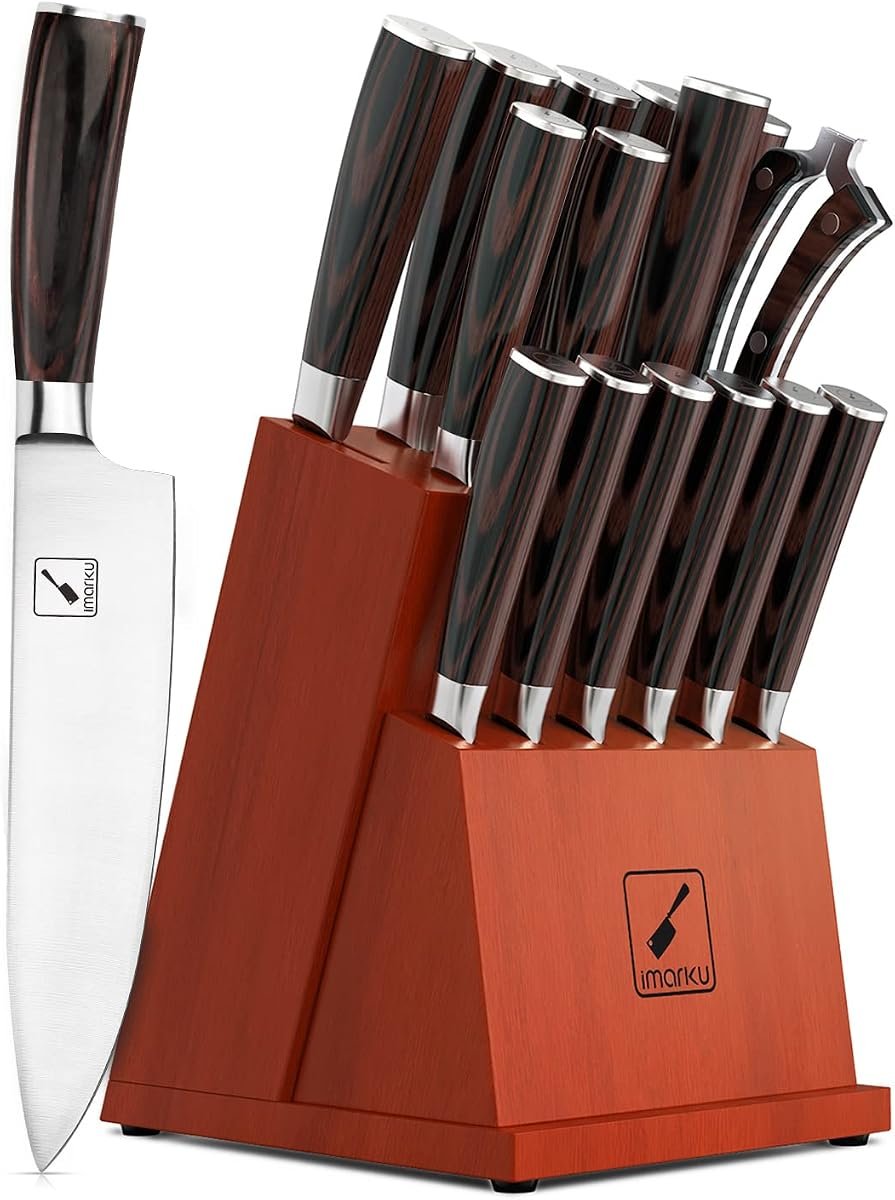
A good knife set is the foundation of everyday cooking. With the right knives, prep work gets faster, safer, and more enjoyable; with dull or poorly balanced knives, even simple tasks feel like a chore. That is why learning how to choose a knife set matters more than collecting the biggest block you can find.
Most home cooks use only three or four knives regularly, no matter how many slots the block has. The goal is not to own every blade shape, but to own a few good ones that feel comfortable in your hand, hold an edge, and cover the jobs you actually do.
Quick answer: For most home cooks, a set with an 8-inch chef’s knife, a serrated bread knife, a paring knife, and kitchen shears covers nearly everything, in high-carbon stainless steel with full-tang construction. Skip giant blocks full of knives you will never use, and spend the money on fewer, better blades.
How to Choose a Knife Set: The Knives You Actually Need
Start with the core four, then add specialty blades only if you cook that way often.
- Chef’s knife (8 inch): The workhorse. It chops, slices, dices, and minces, and it handles most of your daily prep.
- Serrated bread knife: Cuts crusty bread, tomatoes, and cakes without crushing them. A serrated edge is hard to sharpen at home, so buy decent quality here.
- Paring knife (3 to 4 inch): For peeling, trimming, and small, precise work that a big blade cannot do safely.
- Kitchen shears: For herbs, packaging, spatchcocking poultry, and dozens of small jobs. Often overlooked, constantly used.
Nice extras, only if you use them: a santoku for push-cutting vegetables, a boning knife if you break down meat, and a honing steel to keep edges aligned between sharpenings.
Blade Material and Construction
Most good kitchen knives are high-carbon stainless steel, which balances sharpness, rust resistance, and ease of maintenance. Very hard steels hold an edge longer but can chip if abused, while softer steels sharpen easily but dull faster. For a first set, high-carbon stainless is the safe middle ground.
Construction matters too. A full-tang knife — where the metal runs through the whole handle — feels balanced and lasts longer than a partial-tang blade. Look for a bolster where blade meets handle, and a handle that feels secure and comfortable in your grip, not slippery when wet.
Weight is personal. Heavier knives power through dense food with less effort, while lighter knives feel nimbler for long prep sessions. If possible, hold a knife before buying; if buying online, check the weight and handle dimensions on the product page.
Handle, Balance, and Fit
A knife you do not enjoy holding will stay in the block. Balance is the test: a well-balanced chef’s knife feels neither blade-heavy nor handle-heavy when you pinch the blade just ahead of the handle. That pinch grip, not a fist around the handle, is how most cooks control a chef’s knife.
Handle material matters less than shape and grip. Smooth, slick handles can turn in a wet hand, while contoured or textured handles stay put. If you have small hands, a lighter 8-inch chef’s knife or a santoku may feel easier to control than a heavy 10-inch blade.
Left-handed cooks should check whether a single-bevel or asymmetric edge is involved; most Western-style sets are double-bevel and work for either hand. If anyone in the household has grip or wrist issues, a lighter knife with a larger, cushioned handle is worth prioritizing over blade count.
Block, Storage, and Set Size
A block keeps knives protected and within reach, but it also takes counter space and can trap moisture if blades go back wet. Always dry knives before storing them, whatever storage you choose. Alternatives include a magnetic strip (saves counter space and shows the blades), an in-drawer tray (protects edges and hides clutter), or blade guards if you store knives in a drawer — never toss unprotected blades into a drawer.

As for set size, count the useful blades, not the slots. Steak knives and filler pieces inflate the piece count without improving your cooking. A set built around the core knives above is a better buy than a larger block padded with blades you will never reach for. Before buying a block, measure your counter space and check that the block fits under your cabinets.
How to Choose a Knife Set on a Budget
You do not need the most expensive set to cook well. The sweet spot for most home cooks is a solid mid-range set in high-carbon stainless steel with full-tang construction and the core blades covered. Beyond that point, extra money mostly buys finish, brand, and handle materials rather than cutting performance.
If money is tight, buy the core first: one good chef’s knife and a paring knife cover most daily tasks, and you can add a serrated knife later. Check whether single knives from the same line are sold separately, so a damaged or heavily used blade can be replaced without buying a whole new block.
Be skeptical of piece counts in marketing. A set may include several steak knives, shears, and a honing steel alongside only a handful of prep knives. Read the contents list, not the headline number, and make sure the chef’s, serrated, and paring knives are the ones getting the quality — they do the work.
Care: Sharpening, Honing, and Washing
The difference between a good knife set and a great one is often maintenance. Honing with a steel realigns the edge and should be done regularly; sharpening with a whetstone or a professional service actually removes metal and restores a dull edge, and is needed a few times a year for most home cooks. A sharp knife is safer than a dull one, because it cuts predictably instead of slipping.
Wash knives by hand with warm soapy water, dry them immediately, and store them protected. Dishwashers dull edges, loosen handles, and cause rust spots over time — even on knives labeled dishwasher-safe.
Your cutting board matters too. Wood and softer plastic boards are kinder to edges than glass, marble, or ceramic, which dull a blade quickly. If a tomato crushes instead of slicing under the knife’s own weight, it is time to sharpen.
Mistakes That Waste Money
- Buying the biggest block instead of the best core knives.
- Ignoring sharpening: a dull set in a nice block performs worse than a modest set kept sharp.
- Putting knives in the dishwasher, which damages handles and edges.
- Tossing knives loose in a drawer, which dulls edges and risks cut fingers.
- Cutting on glass or stone boards, which ruin an edge fast.
- Skipping the hand check: if you can, hold the knife and judge weight and handle comfort before committing.
Our Picks
- imarku 16-Piece Knife Set — High-carbon stainless steel knives with a storage block, covering the core kitchen blades in one set.
For matching cookware, see our guide to choosing a cookware set.
FAQ
How many knives do I really need?
Three or four: a chef’s knife, a serrated knife, a paring knife, and shears. Everything else is a bonus for specific cooking styles, not a daily necessity.
Is a more expensive knife set worth it?
Up to a point, yes. Better steel and full-tang construction hold an edge longer and feel more balanced. But beyond a solid mid-range set, extra money buys finish and brand more than cutting performance for everyday cooking.
Can I put kitchen knives in the dishwasher?
You should not, even if the box says you can. Dishwasher heat, detergent, and rattling dull edges and damage handles. Hand wash and dry immediately, and your knives will last years longer.
How often should I sharpen my knives?
Hone regularly (every few uses) and sharpen when honing no longer restores a clean cut — for most home cooks, a few times a year. If a tomato crushes instead of slicing under the knife’s own weight, it is time to sharpen.
As an Amazon Associate I earn from qualifying purchases.