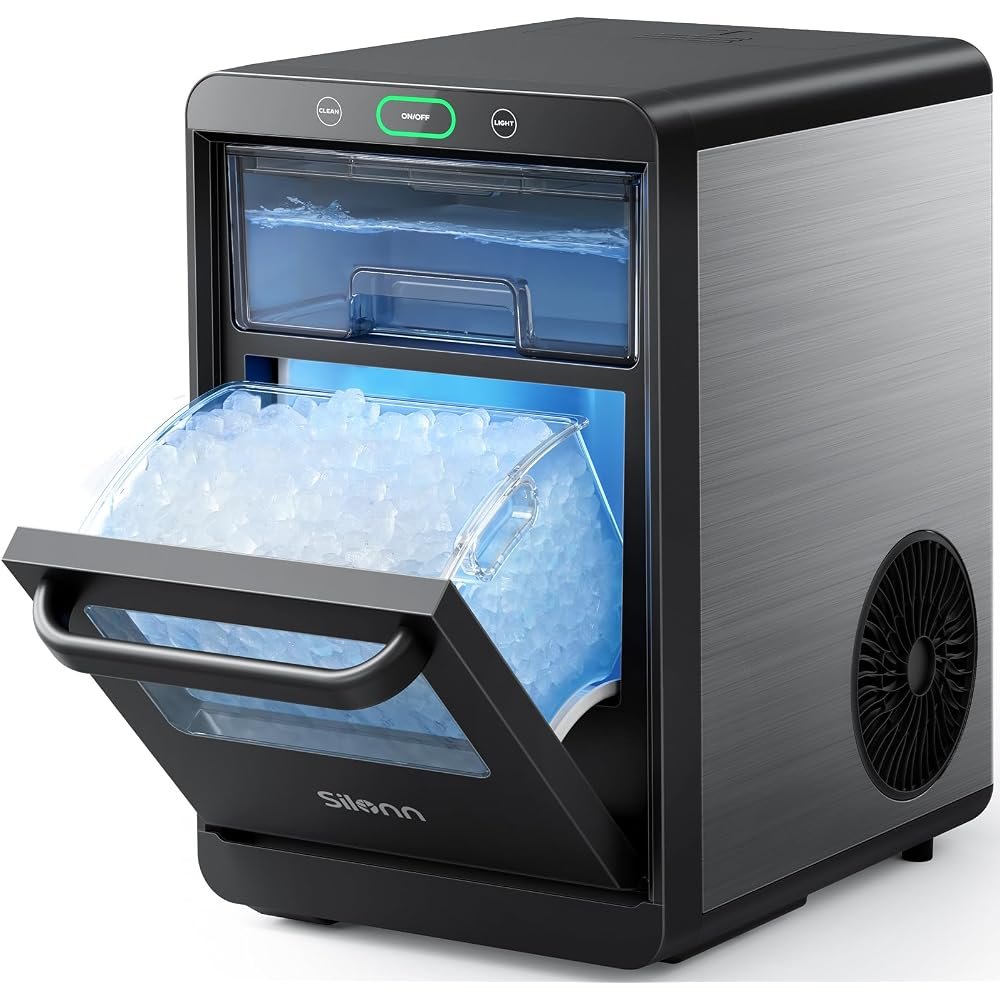
Quick answer: For most households, a countertop nugget ice maker that produces around 24–35 pounds of ice per day, holds 2–3 pounds in its bin, and runs quietly enough for an open-plan kitchen is the sweet spot. Measure your counter space first, then match daily output to how many iced drinks your household actually goes through.
If you have ever crunched your way through a cup of pebble ice from a fast-food restaurant and wondered why it tastes better than the cubes from your freezer, you already understand the appeal. Nugget ice — also called pebble ice or Sonic ice — is soft, chewable, and porous, so it chills drinks fast and soaks up flavor as it melts. Learning how to choose a nugget ice maker is mostly about matching output, size, and maintenance to your real habits, not chasing the biggest number on the box.
What Is Nugget Ice — and Why It’s Different
Nugget ice is made by freezing water into thin flakes, scraping them off, and compressing them into small, airy pellets. The result is nothing like a solid cube.
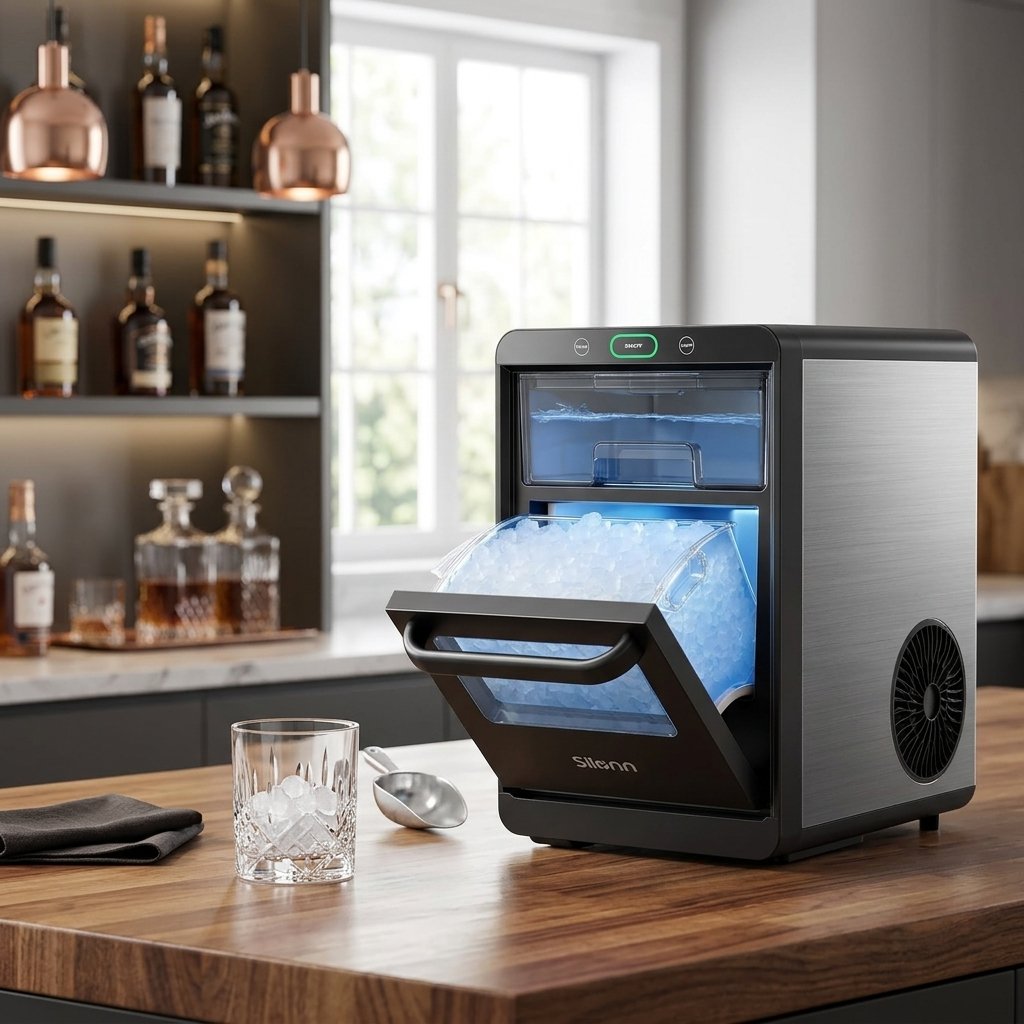
- Soft and chewable: The layered, porous structure crunches easily instead of resisting your teeth.
- Fast chilling: Small pieces mean more surface area, so drinks cool quickly.
- Flavor absorption: Nuggets soak up the beverage around them, so the last sip still tastes like the drink, not watered-down ice.
- Blender-friendly: Nuggets blend smoothly into smoothies and slushies without stressing blender blades.
The trade-off is melt speed. Because nugget ice has so much surface area, it melts faster than large solid cubes. That matters for a cooler you plan to keep all afternoon, but for a glass you will finish within the hour, it is exactly what you want.
How to Choose a Nugget Ice Maker: Daily Output and Bin Size
Daily output, measured in pounds per 24 hours, is the first spec to check — but read it correctly. It describes continuous production under ideal conditions, not how much ice sits ready in the bin.
- Light use (1–2 people, a few iced drinks a day): Around 24 pounds per day is plenty.
- Family use (3–5 people, daily iced coffee and evening drinks): Look for roughly 26–35 pounds per day.
- Frequent entertaining: Aim for 40 pounds per day or more, and plan to transfer ice to a freezer bag ahead of parties.
Bin size matters just as much. Most countertop models hold only 2–3 pounds at a time, and nugget ice left in an unrefrigerated bin slowly melts back into the reservoir and gets remade. That cycle is normal, but it means the bin is not long-term storage. If you host often, scoop finished ice into freezer bags so the machine can keep producing.
Also check first-batch time. Many countertop models produce their first nuggets in under 20 minutes, so you rarely need to run the machine all day. Scheduling production around when you actually drink iced beverages saves countertop noise and energy.
Size, Noise, and Placement
Countertop nugget ice makers are bigger than the bullet-ice machines they sit next to on store shelves. Measure before you buy.
- Footprint: Countertop models typically run about 12–16 inches wide. Leave clearance above the unit so the lid opens fully and you can lift the bin out.
- Ventilation: Most machines need a few inches of airflow around the back and sides. Pushing one flush against a wall can hurt performance.
- Weight and portability: Some models include a handle and are light enough to move to a bar cart or take to a gathering. Heavier models are better left in one spot.
- Drainage: Countertop units usually melt excess ice back into the reservoir rather than draining. Undercounter models may need a drain line — confirm this before choosing a built-in unit.
Noise deserves a real check, too. Nugget machines use a compressor and an auger, so they hum and crunch while running. Models rated under 50 decibels are generally comfortable in an open-plan kitchen, while louder units are better tucked into a pantry or laundry area. If you work from home near the kitchen, treat noise as a deciding factor, not a footnote.
Water Source, Cleaning, and Everyday Maintenance
How the machine gets its water shapes how much attention it needs.
- Reservoir models: You fill a tank by hand. They work anywhere with an outlet, but you will refill the tank regularly — more often on high-output machines.
- Side-tank models: A larger auxiliary tank extends time between refills, which is handy for heavy daily use.
- Plumbed models: A direct water line means no refills at all, but installation is more involved and usually suits a permanent spot.
Cleaning is where many owners fall short, and it affects taste directly. Look for a self-cleaning cycle, which flushes the system with a button press, and plan to run it on the schedule the manual recommends. Use filtered water when you can: it reduces mineral buildup, keeps nuggets tasting clean, and extends the time between deep cleanings. Descale as directed, and wipe the bin and scoop regularly — ice picks up freezer and kitchen odors faster than most people expect.
A few extra features are genuinely useful rather than gimmicks. A viewing window lets you check ice level at a glance. App control and scheduling let you time production for the morning coffee rush. A “quiet mode” or night mode is worth having if the machine lives near bedrooms.
Nugget Ice Maker vs. Bullet Ice Maker: Which Should You Buy?
The other common countertop machine makes bullet ice: hard, hollow, cylindrical pieces formed by freezing water around metal pegs. Both have their place.
- Choose nugget ice if you love chewable ice, drink a lot of iced coffee, sodas, and cocktails, or blend frozen drinks often.
- Choose bullet ice if you want slower-melting ice for coolers and water bottles, or you want the lowest-cost countertop machine.
- Be careful with listings: Some machines advertised as nugget ice makers actually produce bullet ice. Check the ice shape in photos and descriptions — true nuggets are small, soft, irregular pellets, not smooth hollow cylinders.
If you are still unsure, the deciding question is simple: do you chew your ice? If yes, nugget ice is the only type that delivers that experience.
Our Picks
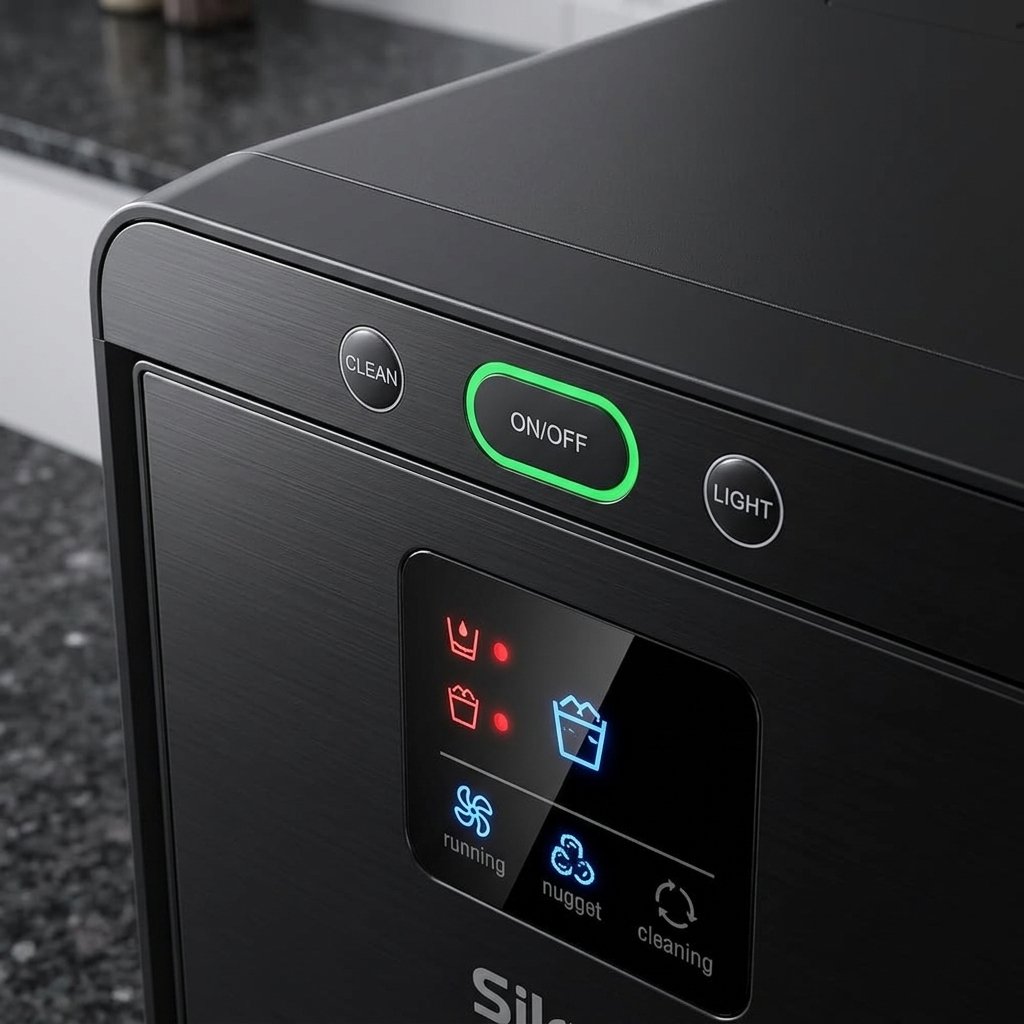
- Silonn Nugget Ice Maker — A countertop pebble-ice machine with a pull-out water tank, suited to everyday family use and easy refills.
Frequently Asked Questions
How much nugget ice does one person use per day?
A rough rule is about one pound of ice per person per day for regular iced-drink habits. A household of four drinking iced coffee and evening drinks will typically be comfortable with a machine rated around 26–35 pounds per day, since the bin only holds a few pounds at a time and production runs continuously.
Does nugget ice melt faster than regular ice cubes?
Yes, somewhat. The small, porous pieces have more surface area, so they melt faster than large solid cubes but slower than crushed ice. In practice this is a non-issue for drinks finished within an hour, and the fast chilling more than compensates.
Can I store nugget ice in the freezer?
Yes. Scoop finished nuggets into a sealed freezer bag and they will keep for days. Let them sit at room temperature for a few minutes before serving so they loosen up and regain their chewable texture.
Is a nugget ice maker hard to clean?
Not with a self-cleaning cycle and filtered water. Run the cleaning cycle on the recommended schedule, descale when directed, and wipe the bin regularly. Machines fed with hard tap water need descaling more often, so filtered water genuinely reduces maintenance.
As an Amazon Associate I earn from qualifying purchases.