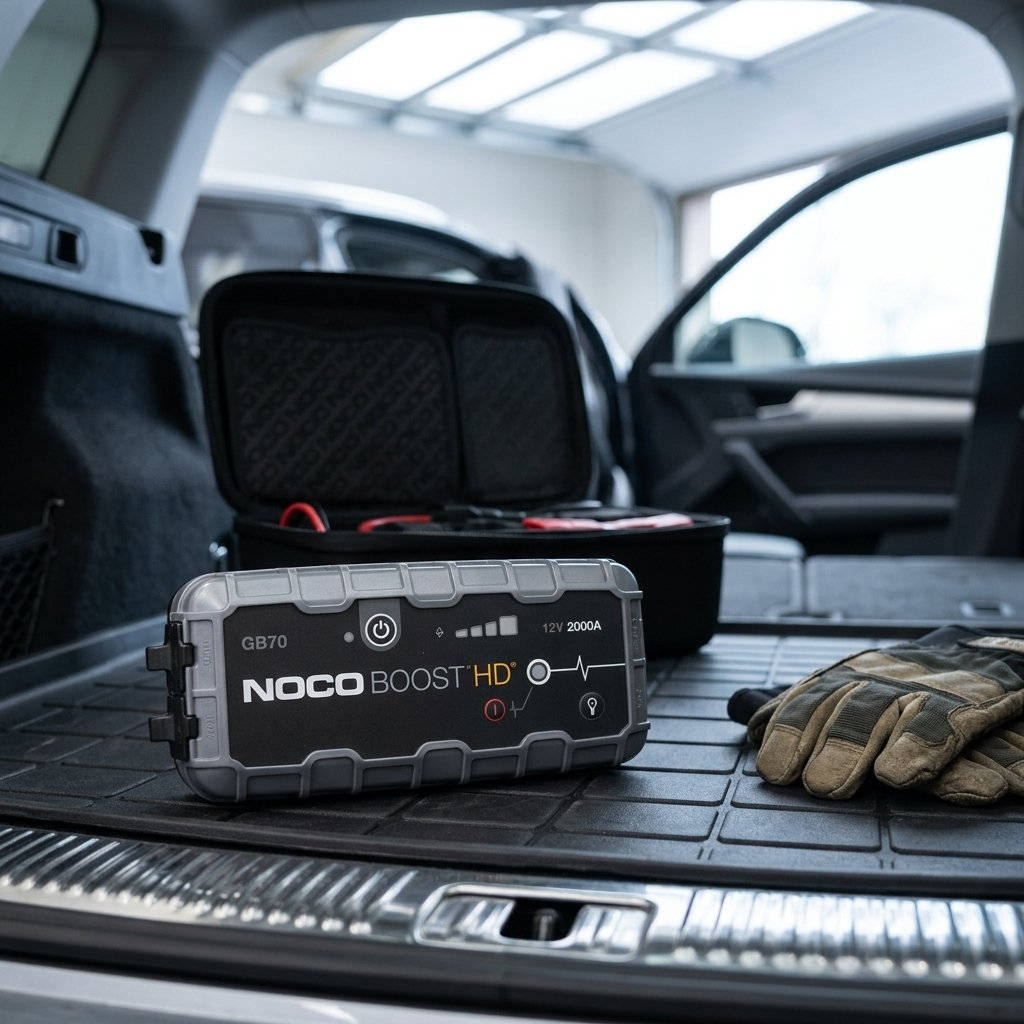
Winter is when cars are most likely to strand you. Cold saps battery charge, tires lose pressure overnight, and a fast-moving storm can close roads long before help arrives. AAA recommends carrying an emergency kit on every trip, and for good reason: a well-stocked car emergency kit turns a potential crisis into a manageable delay.
This guide walks you through everything you need to assemble one that truly works. You’ll learn which items matter most, how to pick the powered gear that actually gets you moving again — the jump starter and the tire inflator — and what to add specifically for winter driving. A dash cam is another smart winter-driving companion; see our guide on how to choose the right dash cam if you’re building a full cold-weather setup.
Quick answer: The right car emergency kit for winter combines power to restart (a lithium jump starter beats jumper cables), a way to handle tire trouble (portable tire inflator + gauge), warmth gear for waiting out help, visibility tools to be seen, and basic first aid, food, and water. A pre-assembled kit covers the basics cheaply; building your own lets you upgrade the two items that matter most — the jump starter and the tire inflator.
What Should a Car Emergency Kit Include?
Think of your winter car emergency kit in six groups. You can buy a pre-assembled kit for the basics and add the winter-specific items yourself, which is usually the best value.
- Light & Power: flashlight with spare batteries, jumper cables or a lithium jump starter, and a phone charger or power bank.
- Tires: portable tire inflator, tire pressure gauge, and foam tire sealant for slow leaks.
- Stay Warm: one blanket per occupant, plus an extra hat, gloves, and socks.
- Traction & Tools: a bag of sand or cat litter, a tow strap, an ice scraper, and a compact shovel.
- Safety & Medical: a first aid kit, reflective warning triangles or LED flares, and a small fire extinguisher.
- Food & Water: bottled water and nonperishable snacks like granola bars.
Power to Get Moving Again
A dead battery is the most common reason cars fail to start in winter. Cold thickens engine oil and cuts battery output at the same time, so even a battery that worked fine in October can give up in January.
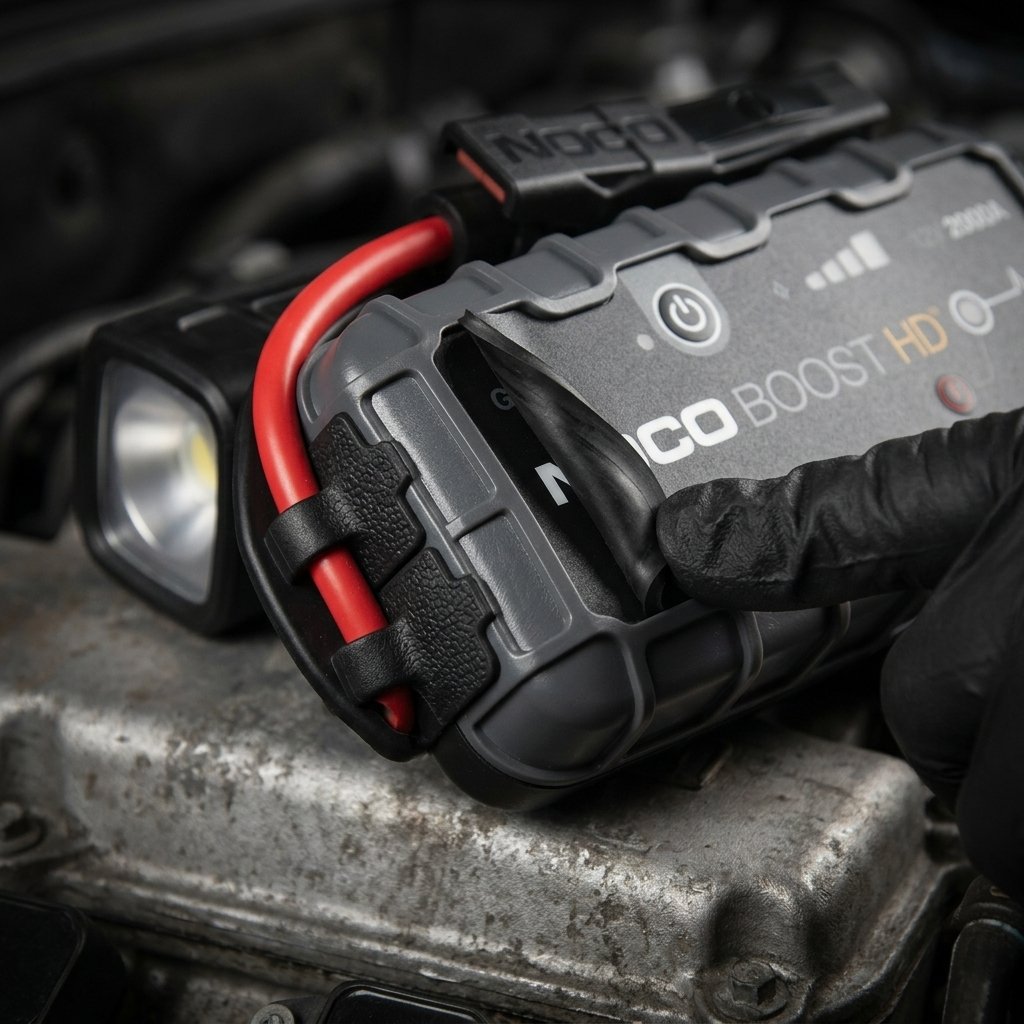
That is why the powered gear is the heart of any car emergency kit. Get this part right, and the rest of the kit is there for comfort and safety.
Lithium jump starter vs jumper cables
A lithium jump starter works without a second car. You connect the clamps, press a button, and start the engine yourself — no flagging down a stranger in a blizzard. Most models also double as power banks, so they can recharge your phone while you wait for a tow.
Jumper cables are cheaper and nearly indestructible, but they need another vehicle with a working battery. For solo drivers, especially on rural winter roads, a jump starter is the clear winner. For a deeper dive, see our guide on how to choose the right portable jump starter.
Match peak amps to your engine
Peak amps measure the burst of current a jump starter can deliver. Bigger engines need bigger bursts, so match the pack to your vehicle:
- 4-cylinder cars: around 1000 peak amps is plenty.
- V6 engines and V8 gas engines up to about 8.0L: look for 2000 peak amps.
- Diesels: size up, since diesel engines demand more cranking current than gas engines of the same size.
Safety and upkeep
Reverse-polarity and spark-proof protection are must-haves — they prevent damage if you connect the clamps the wrong way. Quality packs from reputable brands include both.
Recharge the unit every 2–3 months even when unused, because lithium cells self-discharge in storage. And remember that cold reduces capacity: store the jump starter indoors rather than leaving it in a freezing trunk overnight.
Tire Trouble: Inflator, Sealant, and a Gauge
Tire pressure drops about 1 PSI for every 10°F of temperature drop. A tire that was fine in the garage can be visibly low after a cold night, which hurts handling and fuel economy.
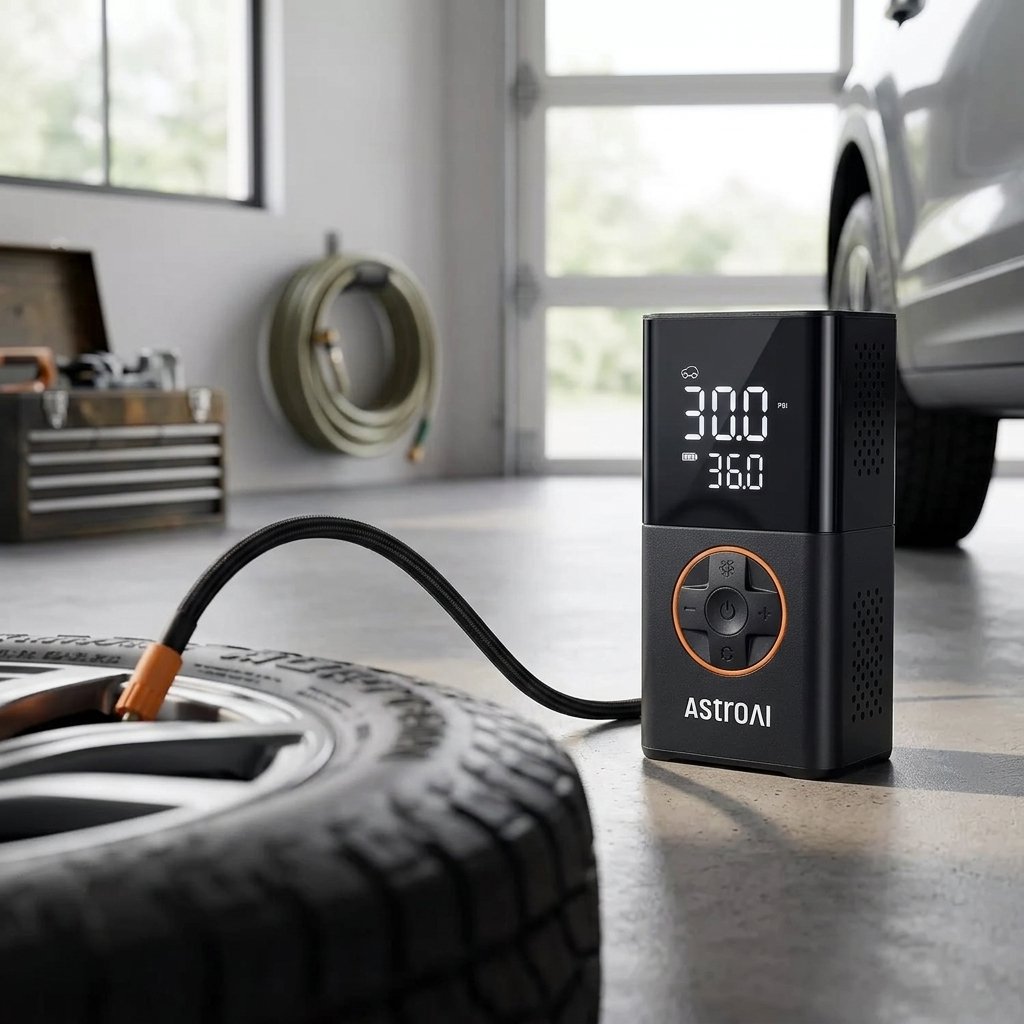
That is why a portable tire inflator belongs in a winter kit. A cordless model tops up low tires anywhere — no gas station air hose needed — and an auto-stop feature prevents over-inflation.
A tire pressure gauge lets you check pressures before driving, so you catch slow leaks early. For punctures, foam tire sealant buys you time to reach a shop without wrestling with a spare on an icy shoulder.
Stay Warm While You Wait
If you slide off the road in a storm, help may take hours to reach you. Hypothermia is the real danger, so warmth gear is non-negotiable: pack a blanket for each occupant, plus spare socks, a hat, and gloves.
If you run the engine for heat, do it in short bursts and crack a window slightly. Always make sure the tailpipe is clear of snow first — a blocked exhaust can push carbon monoxide into the cabin.
Be Seen and Signal for Help
A stranded car in a snowstorm is nearly invisible until it is too late. Set out reflective warning triangles or LED flares behind your vehicle to give other drivers time to react.
Keep a flashlight with fresh batteries within reach, and tie a brightly colored cloth to your antenna or door handle as a distress flag. It is a simple, universal signal that you need help.
Our Picks for a Winter Car Emergency Kit
These are the three powered products we would add first when building a winter car emergency kit. Each one is on our site with full details.
NOCO Boost HD GB70 2000A 12V Lithium Jump Starter — a 2000-peak-amp lithium jump starter that starts gas engines up to 8.0L and doubles as a USB power bank.
AstroAI L7 Tire Inflator Portable Air Compressor — a compact cordless inflator that tops up low winter tires anywhere, no gas station needed.
NOCO Boost Plus GB40 Portable Jump Starter — a smaller 1000-peak-amp option sized for sedans and compact cars.
How to Choose the Right Car Emergency Kit for Your Vehicle
Start with your trunk. Small trunks favor compact lithium units and a single duffel-bag kit — everything in one bag, nothing rolling around. SUVs and trucks have room for more: add a full-size shovel and extra blankets.
Family drivers should count occupants and pack one blanket per person, plus kid-friendly snacks that won’t freeze solid. Whatever you drive, check the whole kit every fall: test the flashlight batteries, toss expired food, and top up the inflator’s charge.
Keep the kit in the trunk or cargo area, organized in one bag, so it is always with the car and ready when you need it.
FAQ
Do I need a jump starter, or are jumper cables enough?
For solo drivers, a jump starter wins. Cables are fine if you can count on another vehicle being nearby, but a jump starter lets you restart the car alone — and it doubles as a phone charger while you wait.
How often should I recharge a portable jump starter?
Every 2–3 months, even if you never use it. Lithium cells slowly self-discharge in storage, and a dead jump starter is just extra weight in your trunk.
What should I add specifically for winter?
Beyond the year-round basics, add blankets (one per occupant), a traction aid like sand or cat litter, an ice scraper and compact shovel, and extra warm clothes — hat, gloves, and socks.
Where should I store the kit in my car?
In the trunk or cargo area, organized in one bag so nothing gets left behind. Keep a window-breaking tool in the driver’s door pocket, where you can reach it even if the doors won’t open.
As an Amazon Associate I earn from qualifying purchases.