The smell of freshly browned toast is one of the easiest ways to make a kitchen feel like home — but the appliance that gets you there is not as obvious as it sounds. The toaster vs toaster oven debate has quietly divided morning routines for years: one is a single-purpose speed machine built to brown bread perfectly, while the other is a compact second oven that also happens to make toast. If you are standing in the kitchen aisle wondering which one actually deserves your counter space, this guide breaks down the real differences, what to look for when you shop, and which choice fits your kitchen.
Buy a toaster if you mainly want fast, evenly browned toast for bread, bagels, and waffles — it is compact, simple to use, and ideal for small kitchens. Buy a toaster oven if you want to reheat leftovers, melt cheese, bake small batches, and skip heating your full oven for everyday meals. Many busy households happily own both: the toaster handles the breakfast rush while the toaster oven becomes the weeknight workhorse.
Toaster vs Toaster Oven: The Core Differences
A toaster is a dedicated appliance that heats bread between two sets of heating elements. It does one job and does it well: most 2-slice models produce evenly browned toast in 2 to 3 minutes. The footprint is small enough to stash in a cabinet, and the controls are about as simple as kitchen appliances get.
A toaster oven, on the other hand, is a small oven that sits on your counter. It toasts, but it also bakes, broils, reheats, and defrosts. That versatility comes with trade-offs:
- Size: A toaster oven is noticeably larger and needs a permanent spot on the counter, with clearance around it for heat. A toaster can live in a cabinet between uses.
- Capacity: A standard toaster handles 2 to 4 slices at a time. A toaster oven can hold up to 6 slices, a small pizza, or a casserole dish — it cooks food, not just bread.
- Toasting speed: Toasters brown bread in 2 to 3 minutes with very even color. Toaster ovens typically take 4 to 6 minutes and can leave light stripes where the rack sits.
- Energy: For small cooking jobs, a toaster oven uses far less energy than heating a full-size oven — a real advantage in summer or for quick reheating.
How to Choose a Toaster: What to Look For

Shopping for a toaster is simple, but a few details separate a great one from a frustrating one.
Slot width and count
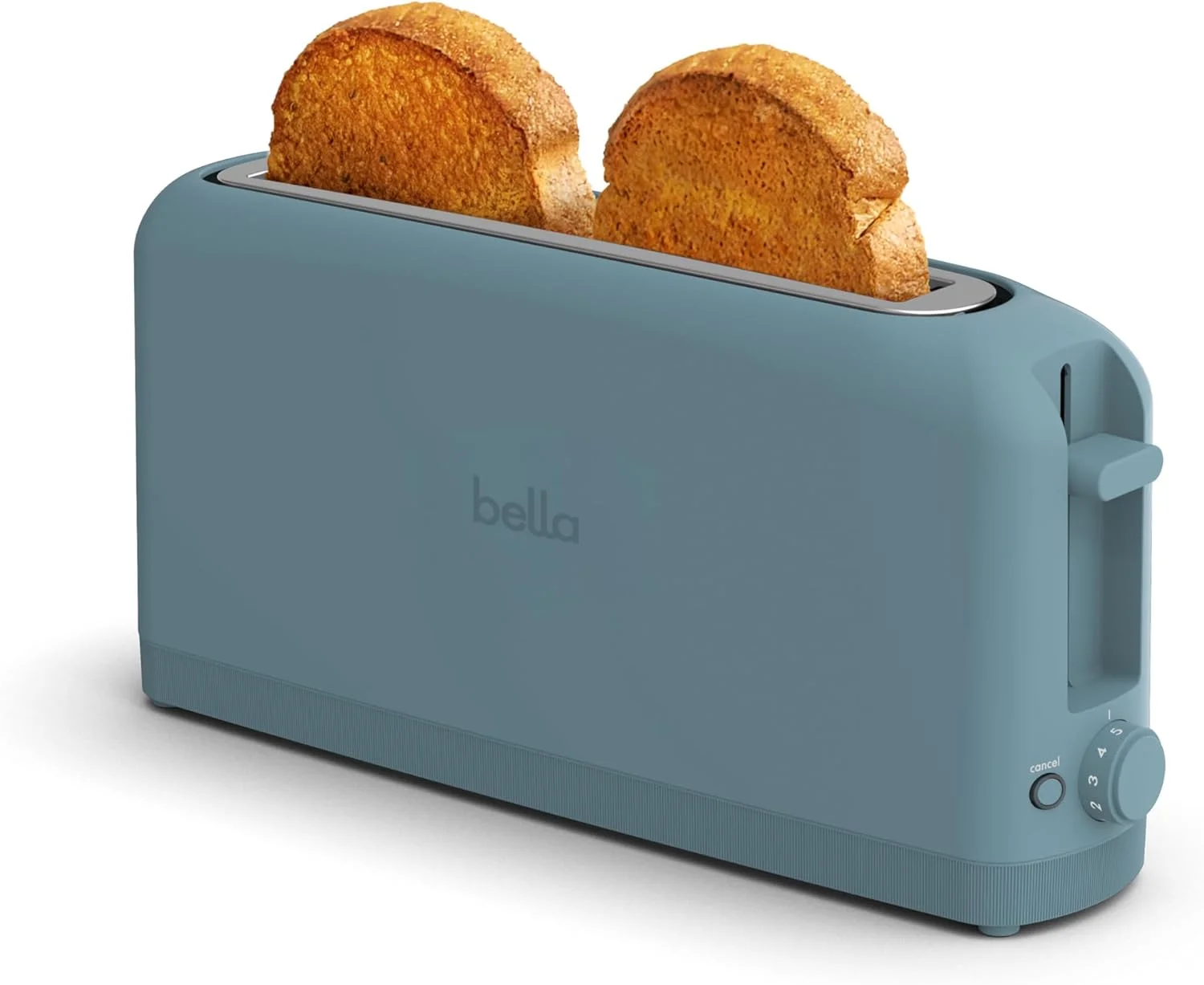
Standard slots handle sandwich bread fine, but if you eat bagels, thick artisan loaves, or English muffins, look for extra-wide, self-centering slots that keep uneven slices close to the elements. Two-slice models suit most people; four-slice models make sense for families where everyone wants toast at the same time.
Useful functions
The basics matter most: a bagel mode (browns the cut side while warming the back), a defrost mode for frozen bread, and a cancel button so you can rescue toast that is browning too fast. Some newer models add a lift-and-look pause feature that raises the toast mid-cycle so you can check the color, then resumes where it left off.
Browning control
Look for a dial or digital control that gives genuinely different results across its range — cheap toasters often toast everything either pale or burnt. Models with a countdown timer take the guesswork out of the process.
Size and storage
Slim, narrow designs fit tight counters, and cord storage underneath keeps the area tidy. A removable crumb tray makes cleanup painless — it is the small detail you will appreciate most after a month of daily use.
How to Choose a Toaster Oven: What to Look For
A toaster oven is a bigger purchase with more variables. Get these right and it will earn its counter space every day.
Capacity
Capacity is usually stated in quarts or liters, but the number that matters most is interior height: it determines whether a 12-inch pizza, a muffin pan, or a small chicken will actually fit. Two or three rack positions give you flexibility for broiling close to the elements or baking lower for even heat.
Cooking functions
Beyond toast, look for bake, broil, reheat, and warm modes at minimum. A convection fan circulates hot air for faster, more even cooking — it is worth seeking out and can cut cooking times by roughly a quarter. Some combo models add air fry, which effectively merges a toaster oven and an air fryer into one appliance.
Power
Aim for around 1400 watts. Higher wattage means faster preheating and the ability to reach 450 to 500°F, which is essential for real baking, roasting, and crisp reheating. Underpowered models struggle with anything beyond basic toasting.
Footprint and door design
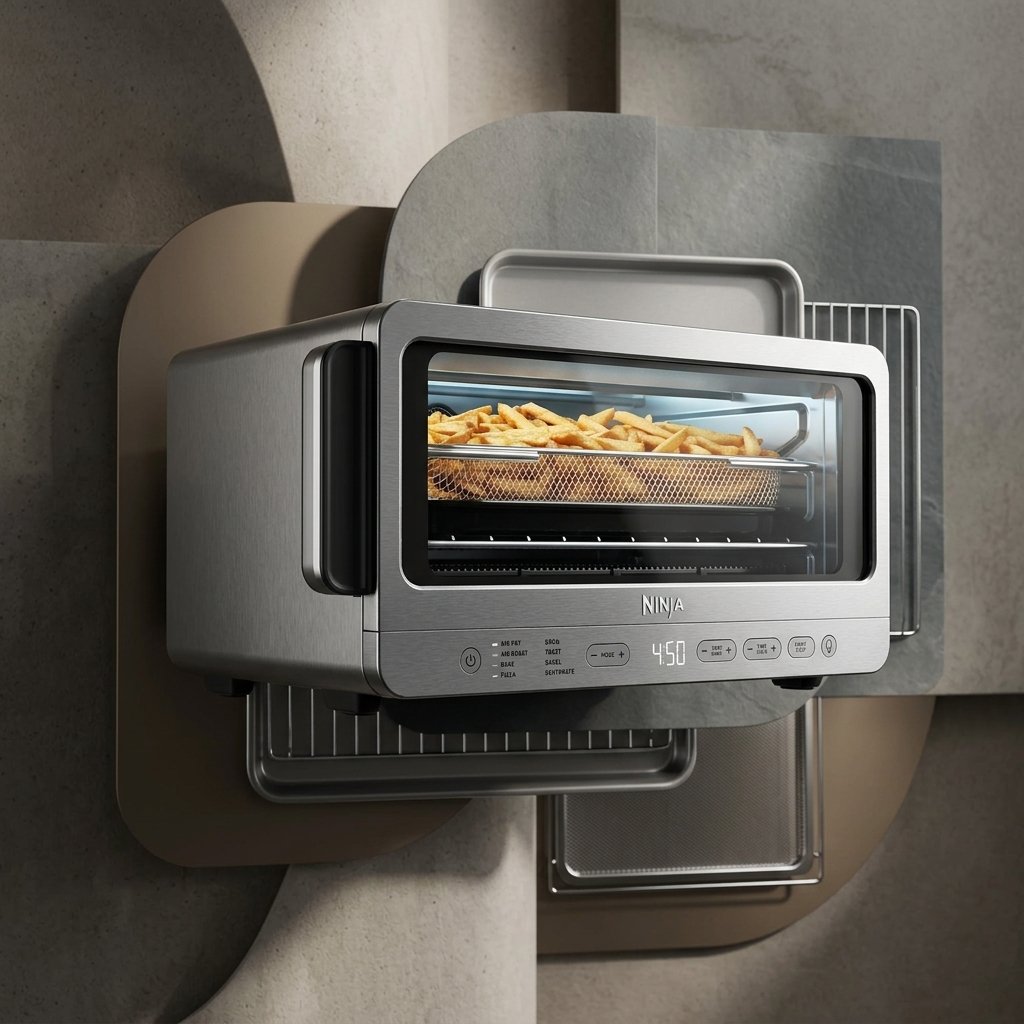
Measure your counter depth before buying, and leave a few inches of clearance on all sides for heat. Flip-up models that tilt upright for storage are a clever answer for small kitchens. A drop-down door that doubles as a crumb tray makes cleanup much easier.
Toaster vs Toaster Oven: Which One Fits Your Kitchen?
Here is how to make the call.
Choose a toaster if you:
- Mainly eat toast, bagels, English muffins, or frozen waffles
- Want the fastest, most consistent toast with minimal fuss
- Have limited counter space or prefer an appliance you can stash away
- Are on a budget and do not need extra cooking modes
- Want something simple enough for kids to use with supervision
Choose a toaster oven if you:
- Love small-batch cooking and reheating leftovers without the full oven
- Want to bake, broil, or roast in addition to toasting
- Regularly cook for one or two people
- Reheat pizza and want it crisp again instead of soggy from the microwave
- Have enough counter space for a multi-tasking appliance
Choose both if you:
- Run a busy household. Many families keep a pop-up toaster on the counter for the everyday breakfast rush and a toaster oven for snacks, side dishes, and small meals. The toaster handles speed; the toaster oven handles everything else.
Our Picks
BELLA Fits-Anywhere 2-Slice Slim Toaster — Our toaster pick. Its slim, space-saving design is made for tight counters, and it is an easy, fuss-free way to get consistently browned toast every morning.
Ninja Flip Air Fryer and Toaster Oven Combo — Our toaster oven pick. It toasts, air fries, and bakes — and flips upright to free your counter when you are done, which solves the toaster oven’s biggest drawback: its footprint.
Frequently Asked Questions
Can a toaster oven replace a toaster?
For most people, yes — if you mostly toast a few slices a day, a toaster oven covers the job and adds far more cooking ability. The trade-off is speed: toasting takes 4 to 6 minutes versus 2 to 3 in a pop-up toaster, and the browning can be slightly less even.
Do toaster ovens toast as well as toasters?
Toasters win on speed and evenness of browning. Toaster ovens are improving, but they can leave faint stripes where the rack sits and take noticeably longer. If toast perfection is the priority, keep a dedicated toaster.
How much counter space does a toaster oven need?
Measure before you buy. You need the appliance’s footprint plus a few inches of clearance on all sides for heat, and room for the door to open. Flip-up or compact models are the answer for small kitchens — our toaster oven pick above flips upright to reclaim counter space.
Is a toaster oven more energy-efficient than a regular oven?
For small jobs, absolutely. Preheating a full oven for a few slices of pizza or a small tray of vegetables wastes a lot of energy and heats up your kitchen. A toaster oven does the same job faster with a fraction of the power.
As an Amazon Associate I earn from qualifying purchases.