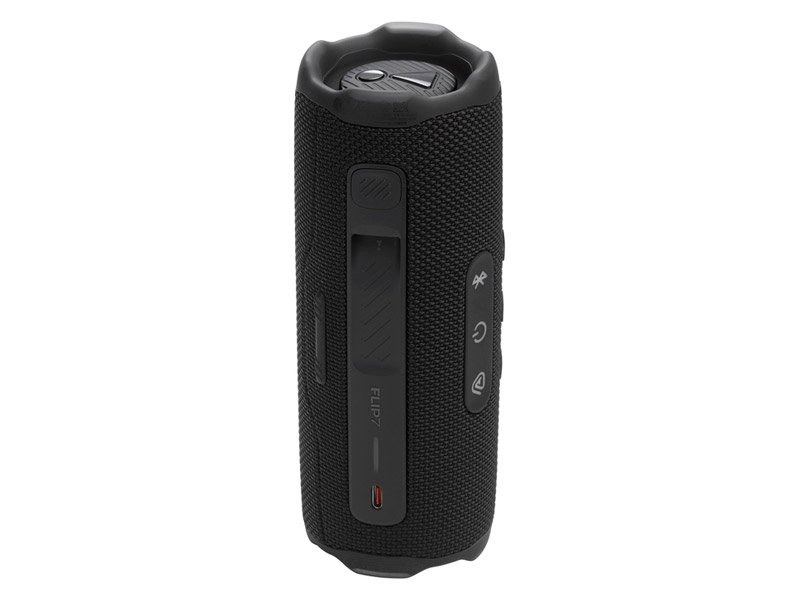
Is the JBL Flip 7 worth it? That is the question every portable-speaker shopper asks when the newest Flip costs more than the discounted Flip 6 sitting right next to it. The Flip 7, launched in 2025 as the latest in JBL’s best-selling Flip line, promises louder sound, tougher waterproofing, and smarter pairing in the same water-bottle-sized cylinder. Whether it earns its place in your bag depends less on the spec sheet and more on how you actually listen — at the beach, on a hike, or around the house.
On paper, the Flip 7 is the most capable Flip JBL has made: AI Sound Boost, Auracast multi-speaker pairing, USB-C lossless audio, and an IP68 rating that survives full submersion. In practice, it delivers on most of that — with two honest catches. Independent battery tests land far below the advertised 14 hours, and the new Auracast system will not talk to older JBL speakers at all. This guide walks through what the Flip 7 does well, where it falls short, and who should buy it.
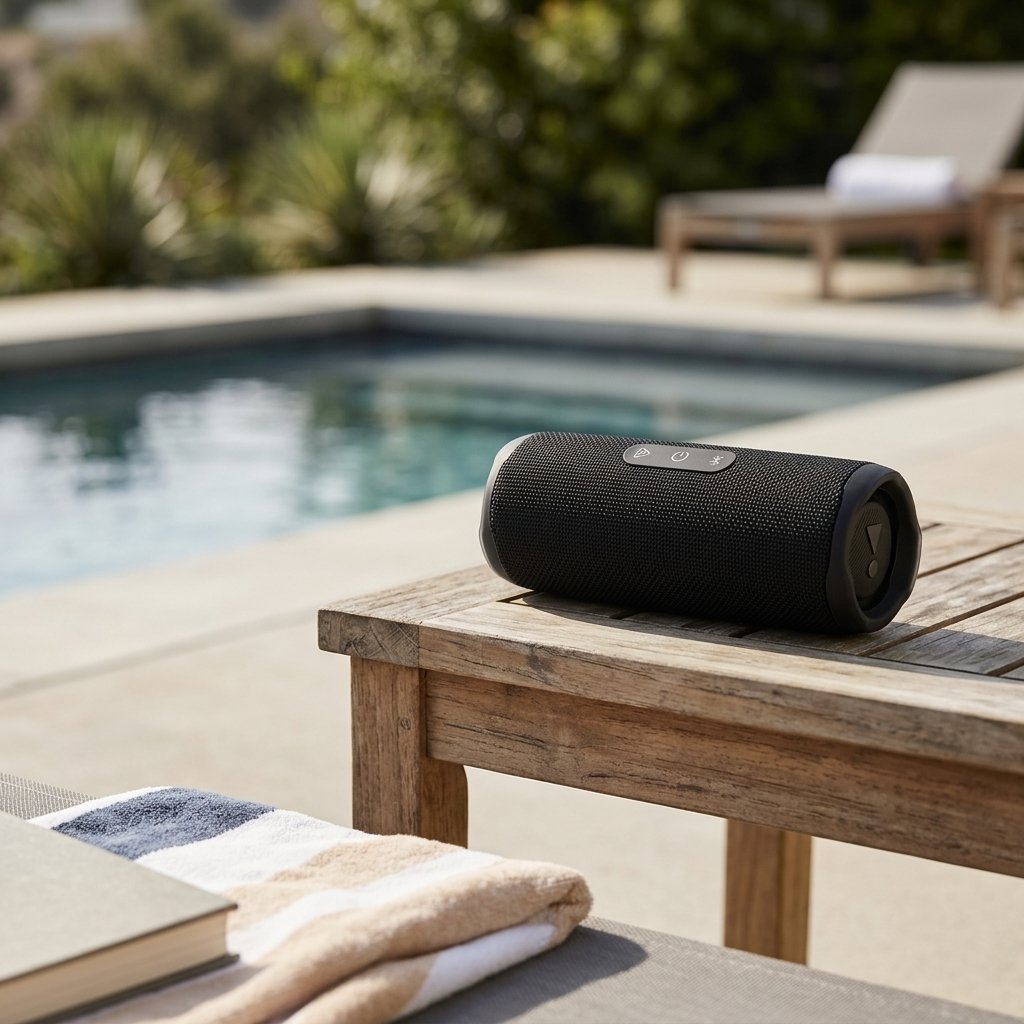
Quick Verdict
Yes — for most people shopping for a rugged portable speaker, the JBL Flip 7 is worth it. It sounds bigger than its size, survives drops and full submersion, and pairs into a true stereo setup with a second unit. The one real caveat is battery life: independent tests measured roughly six hours at party volume, far below the 14-hour rating, so all-day listeners and bass lovers should consider the bigger Charge 6 instead. If you want a grab-and-go speaker that can take a beating, this is the Flip to buy.
What Makes It Worth Considering?
The Flip 7 is more than a fresh coat of paint on the Flip 6. Five upgrades matter in daily use.
IP68 Ruggedness: Built for Water, Dust, and Drops
The Flip 7 is dust-tight and rated for submersion in up to 1.5 metres of fresh water for 30 minutes — a step up from the Flip 6’s IP67 rating — and JBL rates it drop-proof from one metre onto concrete. That means it keeps playing at the pool, on a rainy trail, or after a tumble off a picnic table. For a speaker designed to travel, this is the upgrade that matters most: it removes the worry that has always come with taking a speaker outdoors.
Bigger, Cleaner Sound from a Small Cylinder
Inside the familiar tube, a 25-watt woofer and a 10-watt tweeter deliver 35 watts of total output, with passive radiators at each end extending the low end. AI Sound Boost analyses the music in real time and adjusts driver output to push volume without pushing distortion, so bass-heavy tracks stay tight instead of compressing at high volume. Reviewers consistently describe the Flip 7 as louder and clearer than the Flip 6, with tighter bass and better room-filling presence — impressive for a speaker barely larger than a water bottle.
Auracast: Stereo Pairing for the Modern JBL Lineup
Bluetooth 5.4 brings Auracast, the Bluetooth LE Audio broadcast standard. Pair two Flip 7s for genuine stereo separation, or chain many Auracast-capable JBL speakers for party mode — all managed from the JBL Portable app. It is the practical replacement for JBL’s old PartyBoost system, and for anyone building a multi-speaker setup from scratch, it is the more flexible, future-proof standard.
USB-C Lossless Audio and a Proper EQ
The USB-C port now doubles as a wired audio input with lossless playback, so the Flip 7 can serve as a desktop speaker with a wired connection. The JBL Portable app adds a seven-band custom EQ — up from three bands on the Flip 6 — plus presets, so you can tune the sound to your taste instead of living with the default V-shaped signature.
Made to Travel: Light, Compact, and Clip-Ready
At about 560 grams and roughly the size of a 16-ounce bottle, the Flip 7 fits bicycle bottle cages and outer backpack pockets. The new PushLock system lets you swap accessories quickly, and the loop strap and carabiner come in the box, so it clips to a bag and disappears until you need it.
What Could Be Better?
No speaker is perfect, and the Flip 7’s weaknesses are worth knowing before you buy.
- Real-world battery falls short of the rating. JBL rates the Flip 7 at up to 14 hours, plus two more with Playtime Boost, which trims bass to save power. Independent tests at realistic volumes tell a different story: SoundGuys measured 6 hours 16 minutes at a steady 80 dB, and RTINGS landed around 5.6 hours. At moderate volume the rated figure is achievable, but at party volume you should plan on roughly half a day, not a full one.
- No microphone or speakerphone. The Flip 7 has no built-in microphone, so it cannot take hands-free calls and runs no voice assistant. If you use your speaker for calls or to talk to Alexa, this is the wrong pick.
- No charging cable in the box. Open the box and you get the speaker, the PushLock loop and carabiner, and a quick-start card — but no USB-C cable and no power adapter. Most households have a spare cable, but it is a cheap omission on a speaker at this level.
- Auracast will not talk to older JBL speakers. The Flip 7 cannot pair with PartyBoost models such as the Flip 6 or Charge 5. If your home already runs older JBL speakers, a new Flip 7 will not join them.
- Mono sound from a single unit. One Flip 7 plays in mono. True stereo needs a second Flip 7, which doubles the cost of the setup.
Who It’s For / Who Should Skip It
Who it’s for: commuters and travellers who want a speaker that survives the trip; beach and pool users who need real waterproofing; anyone starting a fresh multi-speaker setup with Auracast; and Flip 6 owners whose old speaker is worn out and who are ready to move to the new standard.
Who should skip it: all-day party hosts who need ten-plus hours at high volume — the Charge 6’s bigger battery and deeper bass suit them better; anyone who takes calls on their speaker; and owners of Flip 6 or Charge 5 speakers who want to mix old and new units in one setup.
JBL Flip 7 vs. JBL Charge 6
If you are torn between the two newest JBL portables, the choice is mostly about size. The Charge 6 is the bigger, louder option: 45 watts of output, a battery rated up to 24 hours (28 with Playtime Boost), and a USB-C port that doubles as a power bank for your phone. It weighs about 960 grams — roughly 70 percent more than the Flip 7. Both share the IP68 rating, Auracast, AI Sound Boost, and USB-C lossless audio. Pick the Flip 7 when portability matters most; pick the Charge 6 when battery life and bass matter more.
Frequently Asked Questions
Is the JBL Flip 7 waterproof?
Yes. It carries an IP68 rating, which means it is dust-tight and can be submerged in up to 1.5 metres of fresh water for 30 minutes. It is also rated drop-proof from one metre onto concrete.
How long does the JBL Flip 7 battery last?
JBL rates it at up to 14 hours, or up to 16 hours with Playtime Boost enabled. Independent tests at higher volumes measured around six hours, so expect less than the rating at party volume and close to it at moderate volume.
Can the JBL Flip 7 pair with the Flip 6?
No. The Flip 7 uses Auracast, while the Flip 6 uses JBL’s older PartyBoost system, and the two cannot connect. The Flip 7 pairs with other Auracast-capable JBL speakers only.
Does the JBL Flip 7 have a microphone?
No. There is no built-in microphone, so the Flip 7 cannot take calls or work with a voice assistant.
As an Amazon Associate I earn from qualifying purchases.